How to Plan a School Year of Catered Lunches
Step-by-step guide to planning a full school year of catered lunches in Vancouver. Covers budgets, menu rotation, allergen surveys, PAC coordination, and BC calendar integration.
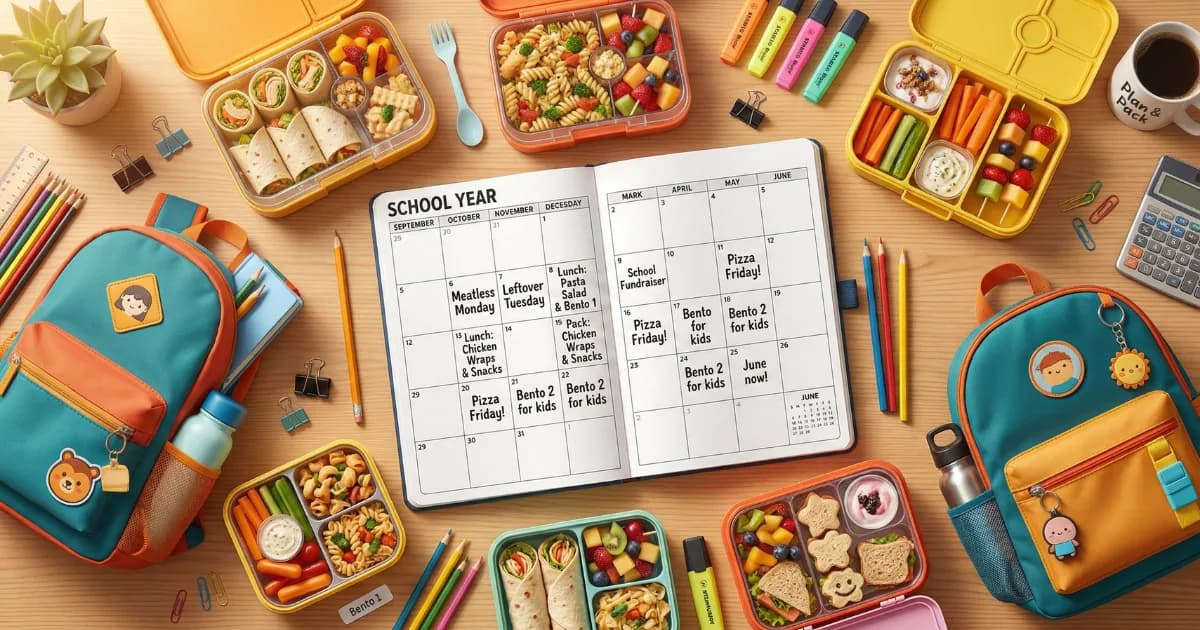
Every September, a handful of Vancouver schools launch catered lunch programs that run smoothly all year. The rest scramble week to week, bleed volunteer hours, and abandon the program by February. The difference is never the caterer — it's whether anyone planned the full year before the first meal was delivered.
I've spent years feeding schools and institutions across Metro Vancouver through The Storm Cafe, and the pattern is always the same. The schools that succeed treat catered lunch planning like a capital project: they start in the summer, build in contingencies, and communicate relentlessly. The ones that fail treat it like ordering takeout — just bigger.
This guide is the planning framework I wish every PAC coordinator and school administrator had before signing their first catering contract. It covers the full 10-month arc from initial budgeting in June through end-of-year wrap-up, with the Vancouver-specific operational details that generic guides always miss.
Summary: Planning a full school year of catered lunches requires starting 3-4 months before September. Key milestones include summer budget approval and caterer selection, August allergen surveys, a September pilot period, 4-week rotating menu cycles with seasonal adjustments, and ongoing communication with parents through opt-in systems and feedback loops — all synchronized against BC's school calendar of Pro-D days, holidays, and early dismissals.
The Planning Timeline:
Start in June, Launch in September
The single biggest mistake I see schools make is starting to plan their catered lunch program in August. By then, caterers are booked, PAC budgets are already allocated, and there's zero time for a pilot run. Here's the timeline that actually works:
June: Budget Approval and Initial Research
Bring a catered lunch proposal to the final PAC meeting of the school year. This is your one shot to get budget approval before summer break. Present per-student cost estimates, projected participation rates, and a clear funding model (more on this below). If the PAC can't vote on funding before school ends, you'll lose three months of momentum.
Survey parent interest before the school year ends. A simple Google Form asking "Would you participate in a catered lunch program at $X per meal?" gives you the participation data you need to size the program. In my experience with Vancouver schools, expect 40-60% initial interest, with actual sustained participation settling around 30-45%.
Begin caterer research. Request proposals from at least three providers. Evaluate them on food safety certification, allergen management capability, delivery reliability in your specific neighbourhood, and menu flexibility — not just price. For schools in Richmond, the caterer's ability to navigate midday traffic between 11:45 AM and 1:15 PM is a genuine operational concern that separates experienced school caterers from everyone else.
July: Caterer Selection and Contract Negotiation
Schedule tasting sessions with your top two candidates. Bring the PAC executive and at least one school administrator. Taste the actual food — not a special presentation menu. Ask to see what a standard Tuesday delivery looks like.
Negotiate the contract with school-year realities built in. Your contract must address: Pro-D day cancellations without penalty, holiday schedule alignment, early dismissal day adjustments, volume flexibility for enrollment changes, and a trial period clause. I'll detail the contract structure later in this guide.
Select your caterer by the end of July. This gives you all of August to onboard, run the allergen survey, and set up your communication systems.
August: Allergen Survey and Systems Setup
Send the dietary requirement and allergen survey to all families. Do this the moment the school sends its back-to-school package — ideally in the first two weeks of August. Cover: known food allergies (severity level), religious dietary requirements, vegetarian/vegan status, and any medical dietary needs. Give families a firm deadline of August 25th.
Share completed allergen data with your caterer. They need at least two weeks to integrate your school's allergen profile into their production planning. At The Storm Cafe, we build a school-specific allergen matrix for every institution we serve — but we can't do that without complete data.
Set up your ordering and payment system. Whether you use a dedicated platform, a simple Google Form, or a paper order sheet, the system needs to be tested before September. Parents who hit friction in the first week will drop out permanently.
September: Pilot Month
Run the first month as a formal pilot. I'll cover the pilot approach in detail below, but the key principle is this: treat September as a test, not a commitment. Collect data on participation rates, food quality, delivery timing, and parent satisfaction. Make your go/no-go decision for the rest of the year based on four weeks of real performance.
Want to taste the difference?
Try our freshly prepared meals with a free tasting box — no commitment required.
Get a Free Tasting →Budget Planning: What It Actually Costs
Let me be direct about the numbers. After running school catering programs across Greater Vancouver, here's the honest cost breakdown.
Per-Student Costs
The per-meal cost for a catered school lunch in Metro Vancouver ranges from $6 to $9 per student, depending on the caterer, menu complexity, volume, and delivery distance. This is the all-in price — food, packaging, delivery, and allergen management included.
For a school with 200 students and a 35% participation rate, that means roughly 70 daily orders. At $7.50 per meal across approximately 185 school days, the annual program cost is about $97,125. That sounds like a big number until you break it down: it's $486 per participating student per year, or about $2.63 per school day.
Funding Models That Work in Vancouver Schools
Most successful school lunch programs I've worked with use a combination of these funding sources:
Full parent-pay model. Parents cover 100% of the per-meal cost. This is the simplest to administer. The PAC manages ordering and payment collection, and no subsidy is needed. Works well at schools where most families can afford $6-9 per meal.
PAC-subsidized model. The PAC uses gaming grant funds, fundraising revenue, or other PAC income to subsidize the per-meal cost. For example, if the catered meal costs $8 and parents pay $6, the PAC covers the $2 gap. This is the most common model I see in Vancouver School Board (VSB) schools because it keeps participation accessible while maintaining program sustainability.
Tiered pricing model. Offer two or three pricing tiers. Full-price meals at $8, reduced-price meals at $5 for families who qualify, and a small number of free meals funded by PAC or community donations. This mirrors the approach used by many established school meal programs across Canada[1].
Federal/provincial grant integration. With the National School Food Program expanding in BC — the province signed a $39.4 million agreement with the federal government to expand school meal access[2] — some schools can now offset catering costs through program funding. Eligibility and reporting requirements vary, so work with your school district to determine if your program qualifies.
The Hidden Costs Nobody Budgets For
- Payment processing fees: If you collect online payments, budget 2.5-3% for credit card processing. On a $97,000 annual program, that's $2,400-2,900.
- Volunteer coordinator time: Someone needs to manage weekly orders, handle cancellations, and troubleshoot issues. Most schools underestimate this at 3-5 hours per week.
- Waste from no-shows: Budget for 5-8% order waste from students who order but are absent. Your contract should address whether you pay for ordered-but-undelivered meals or can adjust orders with notice.
- Supplies: Napkins, hand sanitizer stations, and cleanup supplies for the lunch area. Small cost, but it adds up across 185 days.
Menu Rotation: The 4-Week Cycle That Scales
A 4-week rotating menu is the operational sweet spot for school lunch programs. It provides enough variety to keep students engaged, enough repetition for your caterer to optimize purchasing and prep, and a manageable cycle for allergen tracking.
How to Build the Rotation
Start with 20 distinct lunch options. Four weeks times five school days equals 20 unique meals. Each meal should include a protein, a grain or starch, at least one vegetable, and a fruit or dairy component. Working with schools in Burnaby and Richmond, I've found that lighter, lower-oil options consistently perform better — kids and parents both prefer them.
Rotate proteins across the week. A typical pattern: chicken Monday, vegetarian Tuesday, beef or pork Wednesday, fish Thursday, mixed/flexible Friday. This ensures nutritional balance and accommodates families who eat meat-free on specific days.
Assign "anchor meals" — proven favourites that repeat every cycle. Every school has 4-5 meals that kids reliably eat: teriyaki chicken, pasta with meat sauce, butter chicken with rice, vegetable stir fry noodles, and similar crowd-pleasers. Lock these in first, then build the rest of the rotation around them.
Build in one "adventure meal" per cycle. Introduce one less-familiar dish every four weeks — congee, Japanese curry, bibimbap, or dal with naan. This gives students exposure to diverse cuisines without risking participation drops. In Metro Vancouver's multicultural school communities, these adventure meals often become new anchor meals within two or three cycles.
Seasonal Adjustments
Your 4-week rotation should shift three times during the school year:
- Fall rotation (September-November): Take advantage of BC harvest season. Squash, root vegetables, and local apples are abundant and affordable. Hearty soups and stews work well as the weather cools.
- Winter rotation (January-March): Heavier, warmer meals. Soups, curries, braised dishes, and baked proteins. Local greenhouse vegetables from Delta and Surrey supplement what's available.
- Spring rotation (April-June): Lighter meals as weather warms. Fresh salads paired with proteins, rice bowls, cold noodle options, and seasonal BC fruits — strawberries and blueberries from the Fraser Valley once they come into season.
Communicate each seasonal menu change to parents at least two weeks before the switch. Parents with children who have food sensitivities need time to review new ingredient lists.
Allergen Surveys and Dietary Requirements
The August Survey
This is not optional. Send a comprehensive dietary requirements survey to every family during the back-to-school period. The survey must capture:
- Life-threatening allergies (anaphylaxis-level): peanuts, tree nuts, shellfish, eggs, dairy, soy, wheat, sesame. Indicate severity and whether the child carries an EpiPen.
- Non-anaphylactic food allergies or intolerances: Specifics matter. "Dairy allergy" and "lactose intolerance" require different accommodations.
- Religious dietary requirements: Halal, kosher, vegetarian for religious reasons. In Vancouver schools, especially those in East Vancouver, Richmond, and Surrey, you'll encounter significant dietary diversity.
- Lifestyle dietary choices: Vegetarian, vegan, pescatarian.
- Medical dietary needs: Celiac disease, diabetes management diets, other conditions affecting food choices.
How to Process and Use Allergen Data
Compile all responses into a single allergen matrix by classroom. This document goes to your caterer, your school's administration, and every staff member involved in lunch service.
Flag any student with an anaphylactic allergy separately. These students need individually labelled meals with clear allergen declarations on every box. No buffet-style service, no shared serving utensils.
Update the survey at two points during the year: January (after winter break, when new students may have enrolled) and April (before the spring menu rotation). New students who arrive mid-year need to submit the survey before participating in the lunch program.
Share your school's complete allergen profile with your caterer. At The Storm Cafe, we build school-specific allergen matrices and label every individual meal with comprehensive allergen information — but we need complete, accurate data from the school to do it correctly. A caterer who doesn't ask for this data before their first delivery is a caterer you should not hire.
Communicating With Parents: The Opt-In System
Building the Communication Framework
Transparent, predictable communication keeps parents engaged and prevents the program from collapsing under the weight of complaints and confusion. Here's the system I've seen work best:
Weekly ordering window. Open orders on Thursday evening for the following week. Close orders on Sunday night. This gives parents a consistent rhythm and gives your caterer 48+ hours of lead time for purchasing and prep.
Monthly menu preview. Send the upcoming month's 4-week rotation menu to all families — not just participating families — by the 20th of the prior month. Include full ingredient lists. Parents who haven't opted in yet often join after seeing the menus.
Term-by-term commitment option. Let parents commit for a full school term (September-December, January-March, April-June) at a slight discount, or order week by week at the standard price. Term commitments give you predictable volume for your caterer and reduce weekly administrative burden.
Feedback collection. Run a brief parent survey at the end of each term: What did your child like? What did they refuse? Any concerns? Use this data to refine the rotation for the next term.
Payment Collection
The simplest approach: online payment collected at the time of ordering. Parents order on Thursday-Sunday, pay immediately, and the order is locked. Refunds for absences follow a clear policy — I recommend allowing cancellations up to 24 hours before the delivery day, no refunds after that.
For families who cannot pay online, offer a prepaid card or voucher system managed by the school office. This ensures every participating student gets their meal without payment friction at the point of service.
BC School Calendar Integration
This is where most programs fall apart. The BC school year is not 185 consecutive school days — it's punctuated by Pro-D days, statutory holidays, winter and spring breaks, and early dismissal days. Every one of these affects your catering program.
Non-Delivery Days You Must Account For
Using the Vancouver School Board calendar as a reference, a typical school year includes[3]:
- 5-6 Professional Development (Pro-D) days — students not in school, no lunches needed
- Thanksgiving Monday (October)
- Remembrance Day (November 11)
- 2 weeks winter break (late December through early January)
- Family Day (February)
- 2 weeks spring break (mid-March)
- Good Friday and Easter Monday (variable)
- Victoria Day (May)
That's roughly 30 days out of the potential 195-day window where you do NOT order catered lunches. Missing even one of these in your ordering calendar means paying for meals nobody eats.
Early Dismissal Days
Many Vancouver schools have early dismissal days — usually one per month — where students leave at 1:30 PM or 2:00 PM instead of the usual 3:00 PM. The lunch program still runs on these days, but confirm with your caterer that the delivery window doesn't need to shift. If early dismissal means an earlier lunch period, your caterer needs to know.
How to Build the Calendar
At the start of the year, create a master delivery calendar that maps every school day against the official VSB (or your district's) calendar. Mark every Pro-D day, holiday, break, early dismissal, and known special event day.
Share this calendar with your caterer immediately. They will use it to plan purchasing and production. Any changes — such as a rescheduled Pro-D day — must be communicated to the caterer at least one week in advance.
Build the calendar into your ordering system. If a parent tries to order for a Pro-D day, the system should block it. This prevents errors and refund hassles.
Scaling Throughout the Year
Your lunch program will not serve the same number of students in October as it does in March. Plan for fluctuation.
Enrollment Changes
- New students arrive throughout the year. Each new family must complete the allergen survey before their child can participate. Build a 48-hour onboarding window into your process.
- Some students will leave during the year. Remove them from the ordering system promptly to avoid waste.
- Participation rates typically dip in January (post-holiday budget tightness) and rise in April-May (parents are busier, convenience wins). Expect 10-15% seasonal variance.
Volume Communication With Your Caterer
Your caterer needs predictable volume to maintain quality and pricing. Here's the communication cadence:
- Weekly: Confirmed headcount by Sunday night for the following week.
- Monthly: Participation trend data showing any upward or downward patterns.
- Termly: Formal volume forecast for the upcoming term, shared at least 3 weeks before the term starts.
If your volume drops below the contract minimum, address it proactively with your caterer rather than waiting for them to raise the issue. At The Storm Cafe, we build flexible volume terms into school contracts specifically because participation fluctuates — but that flexibility works best when both sides communicate openly.
Special Events and One-Off Meals
A full-year catering program should accommodate more than just daily lunches. Schools have events that need food, and your existing caterer relationship makes these simpler and more cost-effective.
Hot Lunch Days
Many schools run "hot lunch days" as a special event — typically once a month — where the full school participates, not just the regular lunch program subscribers. These are often PAC fundraisers with a small markup on the per-meal cost. Coordinate these with your caterer at least two weeks in advance. For groups over 100 students, I'd push for three weeks' notice.
Cultural Celebration Meals
Vancouver schools celebrate Lunar New Year, Diwali, Indigenous Peoples Day, and dozens of other cultural events. A thoughtful catered lunch that aligns with these celebrations — red bean buns and dumplings for Lunar New Year, biryani and sweets for Eid, bannock and salmon for Indigenous celebrations — creates community engagement that a standard lunch program alone cannot. These meals require special menu planning, so work with your caterer early.
At The Storm Cafe, our kitchen is built around Asian cuisine, which means Lunar New Year and Mid-Autumn Festival meals are straightforward for us. Other cultural menus may require a different caterer or a collaboration — and that's fine. The point is planning ahead.
Field Trip Box Lunches
Field trips need portable, shelf-stable (or cold-chain) meals that survive a bus ride to the Vancouver Aquarium or Grouse Mountain. Individual boxed lunches with sandwiches or wraps, fruit, a snack, and a drink — all nut-free by default, all individually labelled with allergens. Order field trip boxes at least 48 hours in advance and confirm the count matches your field trip permission slip returns, not your total class enrollment.
Working With Your School's PAC
The Parent Advisory Council is the operational backbone of most school lunch programs in BC. Here's how to structure the PAC's role for success:
PAC Responsibilities
- Budget oversight: Approve the annual catering budget, manage any subsidy funds, and track program finances.
- Volunteer coordination: Recruit parent volunteers for weekly tasks — order management, day-of distribution assistance, and communication with families.
- Caterer liaison: Designate one PAC member as the single point of contact with the caterer. Multiple contact points create confusion and contradictory instructions.
- Feedback aggregation: Collect parent and student feedback each term and translate it into actionable menu change requests.
School Administration Responsibilities
- Allergen safety compliance: The school, not the PAC, is ultimately responsible for student safety. Administration must review and sign off on the allergen management plan.
- Facility access: Confirm that delivery drivers can access the school during the lunch window and that there's adequate space for meal distribution.
- Calendar management: Provide the PAC with the official school calendar — including all schedule changes — at the start of the year and update promptly when changes occur.
The Handoff That Matters Most
When a PAC executive turns over — and in Vancouver schools, PAC leadership changes almost every year — the incoming team needs a comprehensive handoff document. This document should include: the current catering contract, the allergen matrix, the ordering system login credentials, the caterer contact information, the annual delivery calendar, the budget spreadsheet, and notes on what worked and what didn't. Without this, the new PAC starts from zero every September.
The Pilot Approach: Try One Term First
If your school has never run a catered lunch program, do not commit to a full year. Run a one-term pilot (September through December) and evaluate before extending.
What to Measure During the Pilot
| Metric | Target | Action if Below Target |
|---|---|---|
| Participation rate | >25% of student body | Reassess pricing, menu, or communication |
| On-time delivery rate | >95% of deliveries | Discuss logistics with caterer; consider a backup provider |
| Food quality satisfaction | >80% positive in parent survey | Request menu adjustments or tasting session |
| Allergen incident rate | Zero incidents | Immediately review and strengthen allergen protocols |
| Waste rate | <10% of ordered meals | Tighten ordering deadlines; improve cancellation policy |
The Go/No-Go Decision
At the end of September (or the end of the pilot term), review the data honestly. If the program meets the targets above, extend it. If it doesn't, identify the specific failure point and address it — don't just hope it improves. Sometimes the fix is a different caterer. Sometimes the fix is a different pricing model. Sometimes the fix is better communication. But the fix is never "keep doing the same thing and hope parents magically show up."
Cost Comparison: Parent-Prepared vs. Catered Lunches
This comes up at every PAC meeting I've attended, so let me address it directly. Parents always ask: "Isn't it cheaper to just pack a lunch?"
The raw ingredient cost of a parent-prepared lunch is lower — probably $3-5 per meal depending on what's packed. But that comparison ignores everything else:
- Time cost: A University of Alberta study found that preparing a packed school lunch takes Canadian parents an average of 15-20 minutes per day[4]. Over 185 school days, that's 46-62 hours per year. At even a conservative $25/hour opportunity cost, that's $1,150-1,550 in parent time.
- Nutritional consistency: Packed lunches vary wildly in quality. Research shows that packed lunches tend to be higher in sugar and lower in vegetables compared to school-provided meals[5]. A properly planned catered lunch program with a professional caterer delivers balanced nutrition every day.
- Food safety: A packed lunch sits in a backpack for 3-5 hours with no temperature control. A catered lunch arrives in insulated containers and is served within the safe holding window. During Vancouver's warmer months, this matters.
- Convenience during busy periods: The families who need catered lunches most are the ones with two working parents, multiple children in different schools, and no time for morning prep. These are often the same families who contribute the most to a school community in other ways.
The honest answer: catered lunches cost more in direct dollars per meal, but the total cost — including parent time, nutritional quality, and food safety — makes them competitive or even advantageous for busy Vancouver families.
References
[1]: Government of Canada, "National School Food Program," 2024. Canada invested $1 billion over five years to create a national school food program, establishing infrastructure for subsidized and free school meal access. https://www.canada.ca/en/employment-social-development/news/2024/04/national-school-food-program.html
[2]: Province of British Columbia, "Feeding Futures: Supporting school food programs in B.C.," 2025. BC-federal agreement providing $39.4 million over three years to expand school food programs across British Columbia. https://www.gov.bc.ca/bcschoolfood
[3]: Vancouver School Board, "School Calendar 2025-2026," 2025. Official VSB calendar listing school days, Pro-D days, holidays, and break periods for the 2025-2026 school year. https://www.vsb.bc.ca/page/school-calendar
[4]: Tugault-Lafleur, C. N., & Black, J. L., "Differences in the Quantity and Types of Foods and Beverages Consumed by Canadians between 2004 and 2015," Nutrients, 2019. Research examining Canadian meal preparation patterns including packed lunch time investment. https://doi.org/10.3390/nu11030526
[5]: Evans, C. E. L., et al., "A cross-sectional survey of children's packed lunches in the UK: food- and nutrient-level results," Journal of Epidemiology and Community Health, 2010. Found that packed lunches were significantly higher in sodium, sugar, and saturated fat compared to school meals. https://doi.org/10.1136/jech.2008.085563
[6]: BC Centre for Disease Control, "Food Safety for Child Care Facilities," 2026. Guidelines covering food handling, temperature requirements, and allergen management for programs serving children in British Columbia. https://www.bccdc.ca/health-professionals/professional-resources/food-premises-guidelines
[7]: HealthLink BC, "Food Safety in Child Care Facilities," 2026. Provincial guidance on food handling, allergen safety, and sanitation requirements for facilities serving children. https://www.healthlinkbc.ca/healthlinkbc-files/food-safety-child-care-facilities
Frequently Asked Questions
When should we start planning a school year catered lunch program?
Start no later than June of the preceding school year. The June PAC meeting is your window to get budget approval before summer break. July should be spent on caterer tastings and contract negotiation, August on allergen surveys and systems setup, and September on a pilot month. Schools that start planning in August consistently run into problems — caterers are already committed, allergen surveys are rushed, and there's no time for a proper pilot. I've watched programs collapse by October because nobody built the foundation during summer.
How much does a school catered lunch program cost per student in Vancouver?
Expect $6-9 per meal per student in Metro Vancouver, with the exact price depending on your caterer, menu complexity, order volume, and delivery distance. For a school with 200 students and 35% participation, that translates to roughly $486 per participating student annually across about 185 school days. Most successful programs use a hybrid funding model where parents pay $5-7 per meal and the PAC subsidizes the difference using gaming grants or fundraising revenue. The National School Food Program is also creating new funding streams for BC schools.
What happens on Pro-D days, holidays, and early dismissals?
Your catering contract must explicitly address non-school days. Pro-D days and holidays mean no delivery and no charge. The VSB calendar includes 5-6 Pro-D days, two weeks of winter break, two weeks of spring break, and several statutory holidays — roughly 30 non-delivery days per year. Build these into a master delivery calendar at the start of the year and share it with your caterer. Early dismissal days still require lunch service, but confirm whether the delivery window needs to shift. Any schedule changes — like a rescheduled Pro-D day — should be communicated to your caterer at least one week in advance.
How do we handle dietary restrictions and food allergies across the whole school?
Send a comprehensive allergen and dietary requirements survey to every family during the back-to-school period in August, with a firm response deadline before the first day of school. Compile all responses into a school-wide allergen matrix organized by classroom, and share it with your caterer immediately. Students with anaphylactic allergies must receive individually labelled meals with complete allergen declarations — no exceptions. Update the survey twice during the year, in January and April, to capture new students and any changes. At The Storm Cafe, we build a school-specific allergen matrix and label every meal individually, but we need accurate data from the school to make that system work.
Should we commit to a full year or start with a pilot term?
Always start with a pilot. Run September as a formal test month — or commit to one full term (September through December) if your caterer requires a term-length contract. Track five metrics: participation rate (target above 25%), on-time delivery rate (target above 95%), parent satisfaction (target above 80% positive), allergen incident rate (must be zero), and food waste rate (target below 10%). If the pilot meets these targets, extend to the full year. If it doesn't, identify the specific failure point and fix it before recommitting. A pilot protects the school and the PAC from locking into a program that doesn't serve the community well.
Ready to Plan Your School's Catered Lunch Year?
The Storm Cafe has spent years feeding Vancouver schools and institutions with fresh daily meals, comprehensive allergen management, and delivery logistics built for Metro Vancouver's real-world conditions. We work with PACs and school administrators to plan programs that run smoothly from September through June — not just the first exciting week.
- Book a free tasting session for your PAC executive and school admin team.
- Receive a sample school-year contract with all the terms covered in this guide.
- Get a custom budget projection based on your school's enrollment and target participation rate.
Related Articles
Asian Fusion Wedding Catering in Vancouver
Asian fusion wedding catering in Vancouver. Dim sum stations, noodle bars, and multi-course dinners
Meal Delivery in Kitsilano & West Side Vancouver
Fresh Asian meal delivery to Kitsilano and West Side Vancouver. Bento boxes, rice bowls, and noodle

Why 200+ Vancouver Families Trust The Storm Cafe Weekly
Discover why over 200 Vancouver families choose The Storm Cafe for weekly meal delivery. Fresh Asian