Daycare Nutrition Standards in BC: What Your Provider Should Meet
BC daycare nutrition standards require specific meal components, portion sizes, and allergen protocols. Learn what licensed childcare providers must meet under BC's Child Care Licensing Regulation.

When parents ask me what they should look for in a daycare meal program, my first answer is always the same: start with what the province actually requires. British Columbia has some of the most specific childcare nutrition regulations in Canada, and understanding them gives you a concrete checklist — not vague feelings — for evaluating whether your child's daycare is feeding kids properly.
After years of catering to childcare facilities, kindergartens, and family programs across Metro Vancouver through Flavory Food, I've seen the full spectrum. Some providers exceed every standard. Others cut corners that parents would never accept if they knew what to look for. The gap between "we serve healthy food" and "we meet BC's Child Care Licensing Regulation requirements" is wider than most families realize.
This guide walks you through the actual regulatory framework — what BC law requires, what Health Authorities inspect, and what best practices look like in real operation. Whether you're a parent evaluating your child's current daycare or an operator building a compliant meal program, this is the standard your provider should meet.
Summary: BC's Child Care Licensing Regulation and Canada's Food Guide 2019 set specific nutrition standards for licensed daycare facilities, covering meal components, portion sizes by age group, allergen management, and menu documentation. This guide breaks down what's legally required versus best practice, what Health Authorities actually inspect, and the red flags parents should watch for in their provider's meal program.
The Regulatory Framework: What Governs Daycare Nutrition in BC
Two layers of regulation govern what licensed daycares in British Columbia must serve children.
Provincial law comes first. The Community Care and Assisted Living Act (CCALA) establishes the legal authority for childcare licensing in BC, and the Child Care Licensing Regulation (BC Reg. 332/2007) provides the specific operational requirements every licensed facility must follow[1]. Section 48 of the Regulation addresses food and nutrition directly, requiring that children in care receive food that is adequate in both quality and quantity, consistent with Canada's Food Guide, and appropriate for the child's age and development[2].
Federal guidance provides the nutritional framework. Canada's Food Guide (2019 revision) replaced the old four-food-group model with a plate-based approach emphasizing vegetables and fruits (half the plate), whole grains (quarter of the plate), and protein foods (quarter of the plate)[3]. Licensed daycares in BC must plan menus that align with this guidance — it's not a suggestion, it's a licensing condition.
What catches many operators off guard is the specificity. The Regulation doesn't just say "serve nutritious food." It requires that meals and snacks be offered at regular intervals, that menus be posted for parents, and that individual dietary needs — including allergies, intolerances, and cultural or religious requirements — be accommodated and documented[2]. Health Authorities like Vancouver Coastal Health (VCH) and Fraser Health then layer on additional operational guidance about food safety categories, handling protocols, and kitchen classification requirements[4].
How Health Authorities Enforce These Standards
Licensing Officers from VCH and Fraser Health conduct both scheduled and unannounced inspections of licensed childcare facilities. When it comes to food and nutrition, inspectors evaluate the following:
- Menu documentation — Is a current menu posted where parents can see it? Does it cover at least a four-week rotation? Are substitutions documented when they occur?
- Meal component compliance — Does each meal include appropriate servings of vegetables/fruits, grains, and protein foods consistent with Canada's Food Guide?
- Food safety classification — Is the facility operating within its correct VCH food category (Category 1, 2, or 3)? Are required permits in place for higher-risk food preparation?
- Temperature and handling — Are hot foods held above 60 degrees C and cold foods below 4 degrees C? Are temperature logs maintained?
- Allergen management — Are individual children's dietary restrictions documented and accessible to all staff? Are allergen-safe preparation protocols followed?
- Staff qualifications — Does at least one food handler hold a valid FOODSAFE Level 1 certification (required for Category 3 operations)?
I've sat through these inspections alongside daycare operators we supply meals to in Burnaby and Richmond. The inspectors are thorough — they check temperature logs, read posted menus, review allergen binders, and watch food handling practices in real time. A facility that treats compliance as a once-a-year effort before the inspector arrives is going to fail. The standard has to be daily.
Meal Component Requirements: What Goes on the Plate
Under BC's regulatory framework, every meal served in a licensed daycare must include components from multiple food groups. Here's what that looks like in practice, following Canada's Food Guide 2019 proportions[3]:
Lunch and dinner meals must include all three components:
| Component | Plate Proportion | Examples |
|---|---|---|
| Vegetables and fruits | Half the plate | Steamed broccoli, carrot sticks, sliced apple, mixed berries |
| Whole grain foods | Quarter of the plate | Brown rice, whole wheat bread, oatmeal, quinoa |
| Protein foods | Quarter of the plate | Chicken, tofu, lentils, fish, eggs, beans |
Snacks must include at least two food groups — for example, whole grain crackers with cheese, or apple slices with yogurt. Single-food-group snacks (a bowl of just crackers) don't meet the standard.
Water must be available at all times. The Regulation requires that children have access to drinking water throughout the day, not just at mealtimes[2]. Milk or fortified alternatives should be offered with meals, but water remains the primary beverage.
What I notice when working with daycare operators across Greater Vancouver is that the protein component is where facilities most often fall short. Rice and vegetables are easy to scale. But providing adequate, varied protein — especially when balancing nut-free requirements, vegetarian families, and halal needs across a single classroom — takes deliberate planning. At Flavory Food, we build our childcare menus around this challenge specifically, rotating through tofu, chicken, fish, eggs, and legumes across a weekly cycle so no single protein source dominates.
Portion Sizes by Age Group
The Regulation requires that food be appropriate for the child's age and development[2]. Canada's Food Guide doesn't prescribe rigid portion sizes for young children the way the old system did, but Health Authority guidance and dietitian best practices establish practical ranges that licensed facilities should follow[5].
Practical guidance by age group:
Infants (6-12 months): Solid foods are introduced alongside breast milk or formula. Portions are small — 1-2 tablespoons of protein, 2-4 tablespoons of grain and vegetable foods. Textures progress from pureed to mashed to soft finger foods. Licensed facilities must follow each child's individual feeding plan as provided by the parent[2].
Toddlers (1-3 years): Portions increase to roughly 30g of protein, a quarter-cup of grains, and a quarter-cup of vegetables/fruit per meal. Milk or a fortified alternative (approximately 125 mL) accompanies meals. Toddlers should be offered three meals and two to three snacks daily, spaced no more than three hours apart[5].
Preschoolers (3-5 years): Portions grow to approximately 50g of protein, half a cup of grains, and half a cup of vegetables/fruit. Milk serving increases to around 175 mL. This age group can handle more texture variety and mixed dishes like stir-fries and stews.
One thing I emphasize to every daycare operator we work with: these are minimums, not caps. Children should be allowed to serve themselves additional portions if hungry. Family-style serving, where children choose from shared dishes, is encouraged by BC Health Authorities because it supports self-regulation and reduces food waste[4].
Snack vs. Meal Requirements and Timing
The Child Care Licensing Regulation requires that children in full-day programs receive a meal or snack at intervals of no more than three hours[2]. In practice, most licensed daycares follow this schedule:
| Time | Service | Components Required |
|---|---|---|
| 8:30 - 9:00 AM | Morning snack | 2 food groups minimum |
| 11:30 AM - 12:00 PM | Lunch | 3 food groups (veg/fruit, grain, protein) + milk/alt |
| 2:30 - 3:00 PM | Afternoon snack | 2 food groups minimum |
For programs running extended hours (before 8 AM or after 5 PM), additional snacks or meals must be provided. The key distinction: snacks require at least two food groups, while meals require all three plus a beverage. A daycare that serves crackers alone as a snack is out of compliance.
Timing matters for young children's metabolism and behaviour. I've watched what happens when childcare meal deliveries run late — by 12:15, a room of three-year-olds who expected lunch at 11:30 becomes a very different environment. That's why delivery reliability is something I take seriously at Flavory Food. When we supply daycares in Burnaby and Richmond, we build in traffic buffers — especially for Richmond routes between 11:45 AM and 1:15 PM, where midday congestion on No. 3 Road can add 20 minutes to a delivery window. Late food at a corporate office is annoying. Late food at a daycare is a regulatory and behavioural issue.
Menu Planning Documentation Requirements
Licensed facilities must maintain written records of their meal programs. Here's what the Regulation and Health Authority guidance require[2][4]:
- Posted menus — Current menus must be displayed in a location accessible to parents. Most facilities post them at the sign-in area.
- Rotation cycle documentation — Health Authorities recommend a minimum four-week menu rotation. The full cycle should be documented and available for licensing inspection.
- Substitution logs — When an ingredient or dish is changed from the posted menu, the substitution must be recorded with the date and reason.
- Allergen and dietary restriction records — Individual children's allergen profiles, intolerances, and dietary requirements must be documented, updated at least annually (or when changes occur), and accessible to all staff involved in meal preparation and service.
- Ingredient lists — Full ingredient lists for all meals and snacks must be available. This is essential for allergen verification and for parents who request this information.
What I've learned from working with daycare operators across Greater Vancouver: documentation is where facilities most commonly fall behind, not because they don't care, but because daily operations are overwhelming. A good catering partner should handle most of this for you. At Flavory Food, every meal we deliver to a childcare facility comes with a complete ingredient list and allergen declaration. We provide the weekly and monthly menu documentation that facilities need for licensing compliance, so operators can focus on the children instead of paperwork.
Allergen Management Obligations
BC's Child Care Licensing Regulation requires that licensed facilities accommodate children's individual dietary needs, including food allergies[2]. In practice, this creates specific obligations:
For the facility:
- Maintain an up-to-date allergy list for every enrolled child, accessible to all staff
- Ensure staff are trained to recognize allergic reactions and respond with appropriate emergency protocols
- Develop and follow written procedures for preventing cross-contamination
- Communicate allergen information clearly during meal service
For external meal providers:
- Provide detailed ingredient lists for every item delivered
- Prepare allergen-modified meals using dedicated equipment and preparation zones
- Label allergen-free meals clearly to prevent mix-ups during service
- Confirm allergen protocols with the facility before the first delivery
Health Canada recognizes priority allergens — peanuts, tree nuts, milk, eggs, wheat, soy, sesame, fish, crustaceans, and molluscs — plus mustard and sulphites[6]. In my experience catering to Vancouver-area daycares, nut-free policies are nearly universal, and dairy-free and egg-free accommodations are increasingly common. A facility that cannot demonstrate a clear, documented allergen management system will face serious scrutiny from licensing.
At Flavory Food, allergen management is built into our kitchen workflow. When we prepare meals for childcare clients, allergen-free items are prepped on dedicated surfaces with separate equipment, labelled individually, and packaged separately from standard meals. We require at least 48 hours' notice for allergen accommodation on new orders — that's the minimum time needed to verify ingredient sourcing and stage proper separation in our kitchen.
How Flavory Food Helps Daycares Meet These Standards
After years of supplying meals to childcare and family programs across Metro Vancouver, I've built Flavory Food's childcare catering around the practical realities of compliance — not just the theory. Here's specifically what we provide:
Fresh daily preparation — Every meal is cooked and delivered the same day, which directly supports VCH's food safety framework. For facilities operating under Category 1 (food consumed within two hours), our same-day delivery model means operators don't need to worry about storage temperature monitoring or reheating protocols[4].
Complete nutritional compliance — Our childcare menus are structured around Canada's Food Guide 2019 plate proportions. Every lunch includes a protein source, whole grains, and vegetables or fruit. Snack deliveries include at least two food groups. We rotate menus on a four-week cycle with seasonal adjustments, and the full menu documentation is provided to facilities for posting and licensing records.
Culturally diverse options — Metro Vancouver's childcare population reflects one of the most culturally diverse cities in North America. Our menu naturally incorporates Asian cuisine — teriyaki chicken, steamed fish, tofu dishes, vegetable stir-fries — alongside Western staples. For facilities serving children from Chinese, Japanese, Korean, South Asian, and Filipino families, having meals that resemble what kids eat at home improves acceptance and reduces waste.
Delivery reliability across Greater Vancouver — We serve Vancouver, Burnaby, Richmond, Surrey, Coquitlam, and North Vancouver. Our drivers know the traffic patterns — including that brutal Richmond midday window and the bridge delays heading to the North Shore — and routes are planned with buffers that account for Vancouver's actual road conditions, not optimistic map estimates. During our October-to-April rainy season, we use moisture-resistant insulated packaging tested to maintain food above 65 degrees C for 90 minutes in wet conditions.
Red Flags Parents Should Watch For
Based on what I've seen across dozens of childcare facilities in Greater Vancouver, here are the warning signs that a daycare's meal program may not meet BC standards:
No posted menu. If you can't see what your child is eating this week, that's a licensing violation. Menus must be displayed and accessible to parents[2].
Repetitive meals with missing food groups. If lunch is frequently rice and vegetables without a protein source, or crackers and juice as a snack, the facility isn't meeting Canada's Food Guide requirements.
No allergen documentation process. If the facility didn't ask about your child's allergies during enrollment, or if staff seem uncertain about which children have restrictions, the allergen management system is inadequate.
Food prepared from home or unverified sources. Licensed facilities preparing higher-risk foods (meat, fish, eggs, tofu, multi-ingredient dishes) must either hold a VCH food service permit or source from a permitted commercial kitchen[4]. Food arriving in personal containers from someone's home kitchen is a red flag.
No evidence of temperature control during meal service. Hot foods should be warm when served. Cold foods should be cold. If meals are sitting out for extended periods at room temperature, the facility is violating the two-hour rule for food in the danger zone (4-60 degrees C).
Staff cannot answer basic nutrition questions. Ask what food groups are included in today's lunch. Ask how snacks meet the two-food-group requirement. Staff involved in meal service should be able to answer confidently.
Portion sizes that seem uniform across age groups. A two-year-old and a five-year-old should not receive identical portions. If every child gets the same plate regardless of age, the facility isn't following age-appropriate serving guidance.
None of these issues necessarily mean the daycare is unsafe. But each one indicates a gap between the facility's actual practices and what BC's regulatory framework requires. Addressing these concerns with your provider — calmly, specifically, and referencing the actual standards — is both your right and your responsibility as a parent.
References
[1]: Government of British Columbia, "Community Care and Assisted Living Act," [RSBC 2002] Chapter 75. Establishes the legal framework for licensing community care facilities, including childcare centres, in British Columbia. https://www.bclaws.gov.bc.ca/civix/document/id/complete/statreg/02075_01
[2]: Government of British Columbia, "Child Care Licensing Regulation," BC Reg. 332/2007. Section 48 addresses food and nutrition requirements for licensed childcare facilities, including quality standards, meal timing, dietary accommodation, and menu documentation obligations. https://www.bclaws.gov.bc.ca/civix/document/id/complete/statreg/332_2007
[3]: Health Canada, "Canada's Food Guide," 2019. Recommends filling half the plate with vegetables and fruits, one quarter with whole grains, and one quarter with protein foods. Emphasizes water as the beverage of choice. https://food-guide.canada.ca/en/
[4]: Vancouver Coastal Health, "Child Care Facilities: Safe & Healthy Food," August 2015. Outlines three food safety categories (Low Risk, Increasing Risk, Higher Risk), permit requirements, FOODSAFE training, food handling protocols, and approved food preparation guidance for licensed childcare facilities. https://www.vch.ca/en/media/15556
[5]: Dietitians of Canada, "Feeding Your Toddler and Preschooler," 2024. Provides age-appropriate portion guidance and meal spacing recommendations for children aged 1-5 years. https://www.unlockfood.ca/en/Articles/Child-Toddler-Nutrition/
[6]: Health Canada, "Priority Food Allergens," 2024. Lists the priority allergens recognized in Canada: peanuts, tree nuts, milk, eggs, wheat and triticale, soy, sesame seeds, fish, crustaceans, molluscs, mustard, and sulphites. https://www.canada.ca/en/health-canada/services/food-nutrition/food-safety/food-allergies-intolerances/food-allergies.html
Frequently Asked Questions
What specific nutrition standards does BC require for licensed daycares?
BC's Child Care Licensing Regulation (Section 48) requires that food served in licensed childcare be nutritionally adequate, consistent with Canada's Food Guide, and appropriate for each child's age. Every meal must include vegetables or fruit, whole grains, and protein foods. Snacks must include at least two food groups. Meals and snacks must be offered at intervals no longer than three hours during care, and drinking water must be available at all times. Individual dietary needs must be documented and accommodated. Health Authorities like VCH and Fraser Health inspect for compliance during both scheduled and unannounced visits.
How do I know if my daycare's meal provider is properly licensed?
If the daycare prepares higher-risk foods on-site — anything involving meat, poultry, fish, cooked eggs, tofu, or multi-ingredient dishes — it must either hold a food service permit from the local Health Authority or source those meals from a permitted commercial kitchen. Ask your daycare for the name and address of their kitchen or catering provider, then verify their permit status through Vancouver Coastal Health or Fraser Health's public records. At Flavory Food, we operate from a licensed commercial kitchen and provide full documentation to every childcare client.
What are the meal timing requirements for full-day daycare programs in BC?
The Child Care Licensing Regulation requires that children receive meals or snacks at intervals of no more than three hours during their time in care. A typical full-day program serves morning snack around 9 AM, lunch between 11:30 AM and noon, and afternoon snack around 2:30 to 3 PM. Snacks require at least two food groups, while meals require three food groups plus a beverage. Consistent timing matters enormously for young children's metabolism, mood regulation, and ability to focus during learning activities.
How should daycares handle food allergies under BC regulations?
Licensed facilities must maintain documented allergen profiles for every enrolled child, ensure all staff involved in meal service can access this information, implement written cross-contamination prevention procedures, and train staff to recognize and respond to allergic reactions. Health Canada identifies priority allergens including peanuts, tree nuts, milk, eggs, wheat, soy, sesame, and fish. Most Metro Vancouver daycares maintain nut-free policies as standard. External meal providers must supply detailed ingredient lists and prepare allergen-modified meals with dedicated equipment and clear labelling.
What should parents look for when evaluating a daycare's meal program?
Start with the posted menu — it's required by licensing and should be visible at the facility. Check that each meal includes three food groups and each snack includes two. Ask about the menu rotation cycle, request ingredient lists if your child has dietary restrictions, and verify that the facility or its catering provider operates from a licensed commercial kitchen. Watch for age-appropriate portion differences between toddler and preschool groups, and ask staff how they manage allergens during meal preparation and service. If you notice food sitting at room temperature, repetitive meals, or staff unable to identify food group components, raise these concerns with the director.
Ensure Your Daycare Meets BC Nutrition Standards
If you're a daycare operator looking for a catering partner who understands BC's childcare nutrition requirements — or a parent who wants to see what compliant, fresh daily meals actually look like — Flavory Food offers complimentary tasting sessions for childcare programs across Greater Vancouver. Taste the food, review the documentation, and judge for yourself.
Related Articles
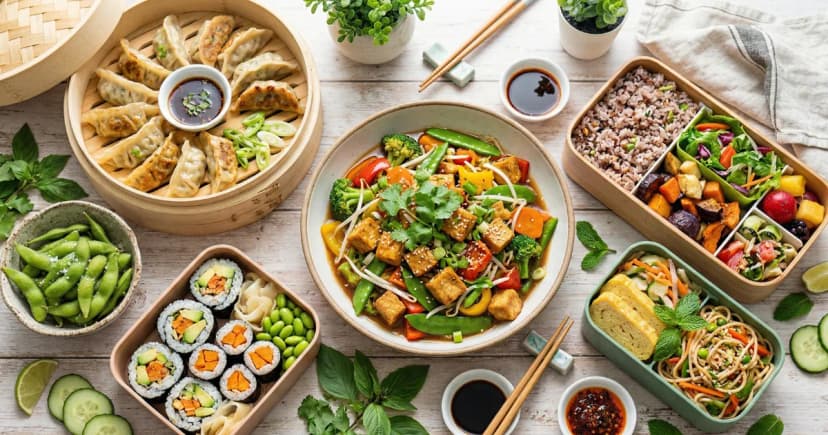
Vegetarian and Vegan Asian Meals: Our Plant-Based Menu
Explore The Storm Cafe's vegetarian and vegan Asian menu: tofu, tempeh, mushroom dishes, and veggie
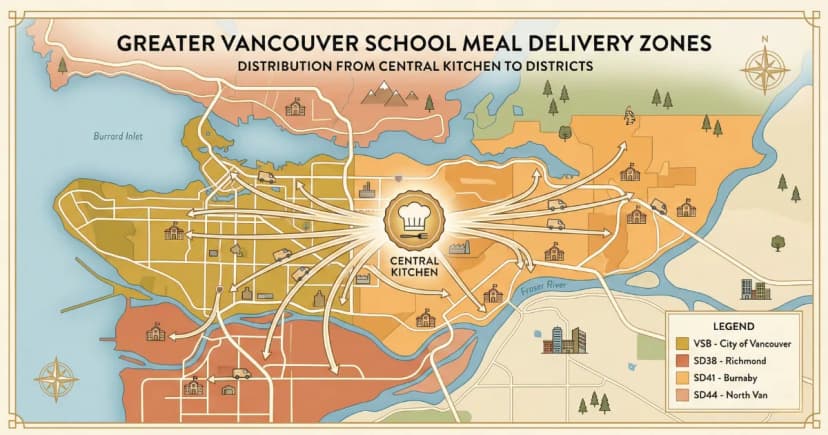
Vancouver School Lunch Delivery: Coverage Map and Zones
Flavory Food's school lunch delivery coverage across Greater Vancouver. Zone-by-zone guide with driv
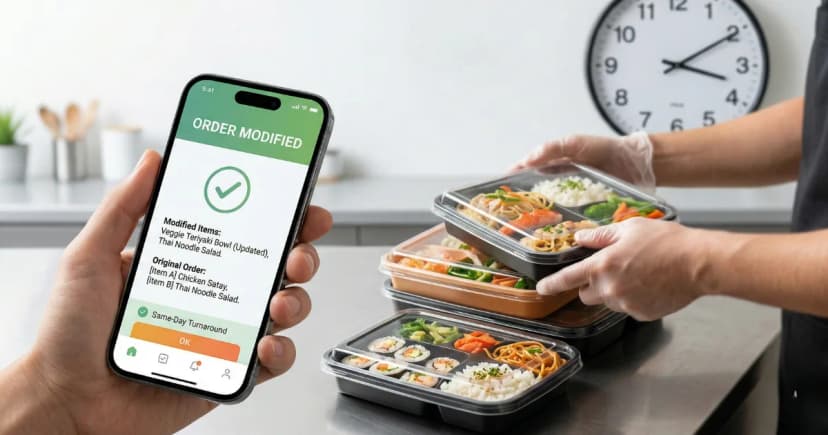
Same-Day Order Changes: Our Flexibility Policy Explained
Flavory Food explains our same-day order change policy for Vancouver families, kindergartens, and sc
Want to taste our meals?
Book a free tasting and let our fresh ingredients speak for themselves.
Free Tasting