Vancouver School Lunch Delivery: Coverage Map and Zones
Flavory Food's school lunch delivery coverage across Greater Vancouver. Zone-by-zone guide with drive times, minimum orders, and school district logistics for VSB, SD38, and SD41.
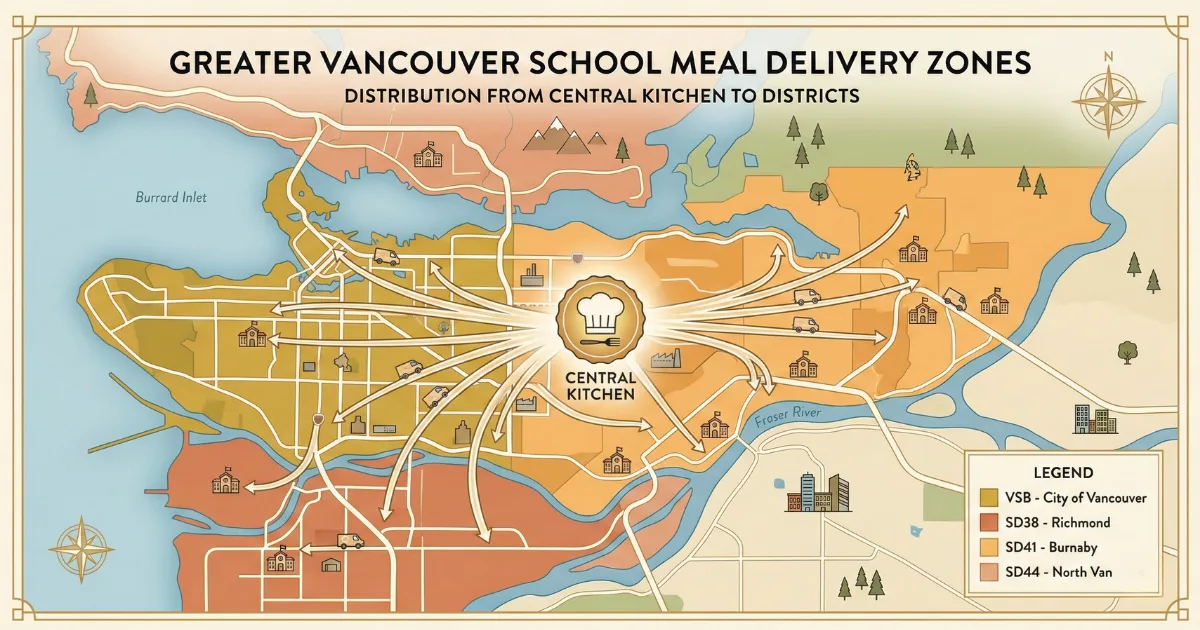
Every school lunch delivery starts with one question: can the food arrive hot, on time, and before the lunch bell rings? After years of delivering to schools and kindergartens across Greater Vancouver, I can tell you that answering "yes" consistently requires knowing exactly which schools fall inside your reliable delivery radius — and being honest about which ones don't.
At Flavory Food, we operate from a commercial kitchen in Vancouver and deliver school lunches to four distinct zones covering the Vancouver School Board (VSB), Richmond School District 38, and Burnaby School District 41 — plus select partnerships beyond those borders. Each zone has different drive times, different traffic patterns, different minimum order requirements, and different logistics for getting food from our kitchen into students' hands before the 11:30 or 11:45 AM lunch window.
This article lays out exactly how our school delivery coverage works. Not a marketing version of it — the operational version. Which zones we serve with high confidence, which zones require careful timing, and what school administrators and parents need to know about how we get food to your building.
Summary: Flavory Food delivers school lunches across four coverage zones in Greater Vancouver, serving VSB, Richmond SD38, and Burnaby SD41 schools. Each zone has calibrated drive times, minimum order thresholds, and purpose-built delivery logistics designed to guarantee food arrives 15-30 minutes before the lunch bell. This guide details every zone with honest timing, limitations, and the operational specifics that school administrators need.
How Our Zone System Works
We don't treat Greater Vancouver as a single delivery area. The geography won't allow it. A school on Commercial Drive in Vancouver is a fundamentally different delivery proposition than a school in Steveston Village in south Richmond or a kindergarten in the Heights neighbourhood of Burnaby. The traffic patterns, the bridge crossings, the distance — all of it changes the math on whether we can guarantee food temperature and on-time arrival.
So we divided our coverage into four concentric zones radiating from our kitchen, each with its own timing profile, minimum orders, and delivery protocols. The zones aren't arbitrary marketing boundaries. They reflect years of real route data — actual GPS logs from hundreds of school runs across different seasons, weather conditions, and traffic scenarios.
Zone 1: Vancouver Proper (VSB — Vancouver School Board)
Coverage: Downtown, Kitsilano, Mount Pleasant, Commercial Drive, Fairview, Dunbar, Kerrisdale, South Vancouver, Marpole, Hastings-Sunrise, Grandview-Woodland
Drive time from kitchen: 10-25 minutes (school-day morning)
Minimum order: 15 meals per delivery
Zone 1 is our home territory. Every VSB school within city limits falls inside this zone, and the delivery math is straightforward — short distances, predictable city-street routing, and enough school density that we can cluster multiple drops into a single morning run. A driver leaving our kitchen at 9:45 AM can hit a Kitsilano elementary, swing east to a Mount Pleasant kindergarten, and finish at a Commercial Drive school, all with food arriving 15-30 minutes before each school's lunch bell.
The traffic variables in Zone 1 are manageable. Broadway can slow down between Cambie and Main during the morning, and the Granville Bridge approach from the south side adds five minutes if you hit it wrong. But these are single-digit-minute variations, not the 20-to-30-minute swings you see when bridges and highway merges are involved. Our insulated carriers maintain food above 60 degrees Celsius for 90 minutes, and no Zone 1 delivery comes close to testing that limit.
For kindergartens and daycares in Zone 1, we handle front-office check-in and direct handoff to the designated staff member. Most Vancouver kindergartens don't have loading docks — it's a front-door delivery with sign-in, and our drivers know the routine at each facility. Elementary schools with larger orders typically have us deliver to the kitchen or the designated drop area near the cafeteria.
Zone 2: Richmond and Burnaby (SD38, SD41)
Coverage: Richmond city centre, Steveston, Ironwood, Brighouse, Garden City, Metrotown, Edmonds, Brentwood, Burnaby Heights, Burnaby North
Drive time from kitchen: 20-35 minutes (school-day morning)
Minimum order: 20 meals per delivery
Zone 2 covers two of our most active school delivery districts. Richmond SD38 and Burnaby SD41 both have substantial demand for catered school lunches, and the routes from our kitchen are reliable during the mid-morning dispatch window when we send out school orders.
Richmond delivery follows a specific pattern. We dispatch early — by 9:30 AM at the latest for Richmond schools — because the No. 3 Road and Westminster Highway corridors start building congestion by 11:00 AM, and any delivery after that window risks running into the brutal midday gridlock between 11:45 AM and 1:15 PM[1]. Our Richmond school runs use the Oak Street Bridge or the Knight Street Bridge depending on which Richmond neighbourhood we're targeting. South Richmond schools near Steveston add five to eight minutes over city-centre locations.
Burnaby schools cluster along the Kingsway corridor and the Metrotown area, with schools in Burnaby North accessible via Hastings Street or the Trans-Canada Highway. The Burnaby route is one of our most predictable — minimal bridge dependence and consistent arterial flow during mid-morning hours. Burnaby Heights and Capitol Hill schools are quick from our kitchen, while the further-east schools near SFU add transit time that we buffer accordingly.
For both districts, we coordinate directly with school front offices on delivery protocol. Burnaby SD41 schools vary in their receiving procedures — some have side entrances designated for food deliveries, others require front-office check-in first. We document each school's procedure on the first delivery and follow it every subsequent time. Consistency matters more than speed when you're walking through a school with 30 hot meals.
Zone 3: North Vancouver and West Vancouver (SD44, SD45)
Coverage: Lower Lonsdale, Central Lonsdale, Lynn Valley, Capilano/Edgemont, West Vancouver (Ambleside, Dundarave, Caulfeild)
Drive time from kitchen: 30-45 minutes (school-day morning)
Minimum order: 30 meals per delivery
Zone 3 is where bridge logistics enter the equation. Every North Shore school delivery requires crossing Burrard Inlet — either via the Lions Gate Bridge for western destinations or the Ironworkers Memorial Second Narrows Crossing for eastern ones. During the mid-morning dispatch window (9:00-10:30 AM), the Lions Gate typically has two northbound lanes available, making it our preferred route for Lower Lonsdale, Central Lonsdale, and West Vancouver schools[2]. The Ironworkers Memorial is faster for Lynn Valley and the eastern District of North Vancouver schools.
The critical constraint for Zone 3 school delivery is that we must dispatch by 9:15-9:30 AM to guarantee arrival before the 11:15-11:30 AM lunch window that most North Shore schools follow. That's tight. It means our kitchen schedules Zone 3 school orders as the first batch of the morning, with food entering carriers at peak temperature and drivers departing before the mid-morning bridge flow starts building.
West Vancouver schools — SD45 — add another layer. After crossing the Lions Gate, Marine Drive runs west through Ambleside and Dundarave before reaching the further-west neighbourhoods of Caulfeild and Horseshoe Bay. The Marine Drive route is scenic but narrow in sections, and any disruption between Park Royal and the school's location adds time with no shortcut available. We serve West Vancouver schools in the Ambleside-to-Caulfeild corridor with honest communication about the delivery window. Schools further west than Caulfeild are currently outside our reliable school delivery zone.
SD44 (North Vancouver) schools in the Lonsdale corridor are our most efficient Zone 3 stops. Once across the Lions Gate, Lonsdale Avenue runs straight up the hill with numbered cross streets making navigation simple. Lynn Valley schools require the Ironworkers Memorial route, which adds 10-15 minutes over Lonsdale but avoids the cross-city surface-street transit entirely.
Zone 4: Coquitlam, New Westminster, and North Surrey (SD43, SD40, SD36)
Coverage: Central Coquitlam, Burquitlam, Port Coquitlam (select), New Westminster, North Surrey (Whalley, Guildford, Fleetwood)
Drive time from kitchen: 40-55 minutes (school-day morning)
Minimum order: 40 meals per delivery
Zone 4 represents the outer edge of our reliable school delivery coverage. The distances are real — 30 to 45 kilometres from our kitchen to the school door — and the timing margin is the tightest of any zone. We serve Zone 4 schools, but I want administrators to understand the logistics clearly before committing.
Coquitlam schools (SD43) are reached via Highway 1 or Lougheed Highway. During the morning dispatch window, Highway 1 traffic generally flows well eastbound, but the Brunette Avenue interchange where Highway 1 meets traffic from New Westminster is an unpredictable bottleneck[3]. We dispatch Zone 4 school orders first, by 9:00 AM, to build maximum buffer ahead of the lunch period.
New Westminster schools (SD40) sit conveniently along the Kingsway-to-Royal Avenue corridor, making them some of the fastest Zone 4 destinations despite being technically further from our kitchen than some Burnaby schools. The New West Quay area and Uptown New Westminster are accessible and predictable.
North Surrey schools require crossing the Fraser River via the Alex Fraser Bridge or the Pattullo Bridge. The Pattullo Bridge replacement project has created years of construction-related congestion, and the Alex Fraser can back up during even off-peak hours[4]. Surrey school delivery is our newest Zone 4 addition, and we're straightforward with Surrey school administrators: we serve the northern corridor from Whalley through Guildford, but schools south of the Highway 10 corridor are outside our current reliable coverage.
For all Zone 4 schools, the minimum order of 40 meals ensures the extended route is operationally sustainable. A single delivery run of that volume justifies the driver time, fuel, and scheduling priority that Zone 4 requires.
Summary: Four zones with calibrated logistics: Zone 1 (Vancouver/VSB, 10-25 min, 15-meal minimum), Zone 2 (Richmond SD38/Burnaby SD41, 20-35 min, 20-meal minimum), Zone 3 (North Van SD44/West Van SD45, 30-45 min, 30-meal minimum), Zone 4 (Coquitlam SD43/New Westminster SD40/North Surrey SD36, 40-55 min, 40-meal minimum). Each zone has purpose-built routing, dispatch timing, and delivery protocols.
School Delivery Logistics: How Food Reaches the Building
Timing the Lunch Bell
The non-negotiable constraint in school lunch delivery is the bell schedule. If food arrives at 11:40 AM and the lunch period starts at 11:30, we've failed — even if the food is perfect. Every school delivery is timed to arrive 15 to 30 minutes before the lunch period begins. This buffer accounts for three things: unloading the vehicle, checking in at the front office or receiving area, and staging the meals where they need to be for distribution.
Most Vancouver-area elementary schools start lunch between 11:15 and 11:45 AM. Secondary schools often run later, with lunch periods beginning at 12:00 or 12:15 PM. Kindergartens and daycares vary, but many serve lunch between 11:00 and 11:30 AM — earlier than elementary schools, which means our kindergarten deliveries typically dispatch first each morning.
We maintain a school-specific delivery schedule that accounts for each partner school's exact bell time, check-in procedure, and unloading logistics. That schedule is built during onboarding and adjusted whenever the school communicates a change — Pro-D days, early dismissals, exam schedules, or special event days that shift the lunch window.
Loading Dock vs. Front Office Check-In
School receiving procedures vary more than most people realize:
- Elementary schools with kitchen facilities often have a side or rear entrance designated for food deliveries. Our driver parks, enters through the designated door, and stages meals in the kitchen prep area. This is the fastest drop-off protocol — five to eight minutes from vehicle to completed handoff.
- Elementary schools without dedicated kitchens typically require front-office check-in. The driver signs in at the main entrance, identifies themselves and the delivery, and is directed to the classroom or hallway staging area. This adds three to five minutes over a direct kitchen drop.
- Kindergartens and daycares almost always use front-door delivery with staff handoff. The meals go directly to the facility coordinator, who takes responsibility for plating or distribution. Our driver confirms the meal count, notes any substitutions, and gets a signature or verbal confirmation.
- Secondary schools with cafeterias usually have a back-of-house receiving area that functions like a commercial kitchen dock. These are the most efficient — purpose-built for receiving food deliveries, with counter space for staging and clear pathways from the vehicle.
Our drivers document each school's procedure on the first delivery and follow the established protocol every subsequent visit. When a school changes its receiving procedure — which happens more than you'd expect, especially after renovations or staff changes — we update our records immediately.
Kindergarten vs. Elementary vs. Secondary: What Changes
The meals themselves are different across age groups, but so is every aspect of the delivery:
Kindergarten (ages 3-5): Smaller portions, softer textures, every container pre-opened or easy-open for small hands. Allergen labeling is paramount — kindergarten staff need to match every meal to every child without ambiguity. Our kindergarten meal containers are individually labeled with the child's name and dietary flags when the facility provides a roster. Delivery quantities are typically 15-30 meals.
Elementary (ages 6-12): Standard portion sizes with more variety in menu options. Elementary schools often want two or three menu choices per delivery day so students can select. We package by menu option, clearly labeled, so the distributing staff can sort quickly. Delivery quantities range from 20 to 100+ meals depending on the program.
Secondary (ages 13-18): Larger portions, higher protein content, and broader flavour profiles. Secondary school students eat more and have more defined preferences. These deliveries tend to be the largest volume — 50 to 200+ meals — and the logistics favour cafeteria-style staging with grab-and-go packaging.
Seasonal Considerations: School Year vs. Summer
September Through June: The Core School Season
Our school delivery operation runs at full capacity from early September through late June, aligned with the BC school calendar. Within that window, several seasonal factors affect delivery:
October through April (rain season): Vancouver's extended rainy period affects road conditions, visibility, and average drive times. Wet roads on the Lions Gate Bridge and Highway 1 slow crossing speeds. Our moisture-resistant insulated carriers are tested for these conditions, but we add an extra five-minute buffer to Zone 3 and Zone 4 deliveries during heavy rain days. Drivers check weather forecasts as part of the morning dispatch protocol.
December and January (shortest daylight): Early-morning dispatch in Zone 3 and Zone 4 happens in near-darkness during these months. Our drivers are experienced with the routes, but reduced visibility affects overall traffic speed, particularly on the North Shore where mountain-shadow darkness arrives early.
Pro-D days and holiday breaks: Every school district follows its own professional development day schedule. VSB, SD38, SD41, SD43, SD44, and SD45 do not all share the same Pro-D day calendar. We maintain district-specific calendars and cancel or adjust deliveries per school, not per zone. A Zone 2 run might skip one Burnaby school on an SD41 Pro-D day while still delivering to a Richmond SD38 school on the same route.
Summer Programs (July-August)
Summer changes the equation substantially. Regular school meal programs pause, but summer camps, summer school sessions, and year-round childcare facilities continue. We serve summer programs on a modified schedule:
- Reduced route frequency (typically three days per week instead of five)
- Adjusted dispatch times to align with camp schedules, which often differ from school-year bell times
- Smaller order volumes per stop, with modified minimums negotiated per facility
- Summer traffic patterns are generally lighter, which improves Zone 3 and Zone 4 delivery reliability
Schools or camps interested in summer meal delivery should contact us by May to allow scheduling and menu planning before the summer season begins.
How Schools Can Request Coverage in New Zones
We're actively expanding our school delivery coverage, and the process for requesting service in a new area is straightforward:
- Contact us with your school's details: Location, student headcount for the meal program, preferred delivery days and times, and any dietary requirements specific to your school community.
- We assess the route: Our logistics team maps the drive from our kitchen to your school, factoring in time-of-day traffic, bridge crossings, and existing delivery routes that might allow clustering your school with nearby stops.
- Trial delivery: Before committing to a long-term partnership, we run a two-to-four-week trial. This lets both sides evaluate timing reliability, food quality on arrival, and the operational fit between our delivery protocol and your school's receiving procedures.
- Ongoing partnership: If the trial confirms that we can serve your school reliably within our quality standards, we establish a recurring delivery schedule aligned with your district's calendar.
If your school falls outside our current four zones, we still want to hear from you. Route expansion happens when we identify clusters of schools in adjacent areas that can be served together. A single school in an unserved area is difficult to justify logistically, but three schools along the same corridor changes the economics entirely.
Delivery Guarantees and Traffic Delays
What We Guarantee
Every school delivery carries these commitments:
- Arrival 15-30 minutes before the posted lunch period. Not "around lunchtime" — a specific window calibrated to your school's bell schedule.
- Food temperature above 60 degrees Celsius at handoff. Our insulated carriers are tested to maintain this standard for 90 minutes from kitchen departure. No Zone 1 or Zone 2 delivery approaches this limit. Zone 3 and Zone 4 deliveries during normal conditions have 30-45 minutes of remaining margin.
- Accurate meal counts and allergen labeling. Every meal is counted before it leaves the kitchen and cross-referenced against the school's order at delivery.
What Happens When Traffic Delays Occur
Delays happen. The Lions Gate Bridge has maintenance closures. Highway 1 has accidents. Richmond's No. 3 Road grinds to a halt during construction season. Here's our protocol when a delay threatens a school delivery:
- Immediate notification. The driver contacts our dispatch coordinator the moment a delay is identified — not when they're already late, but when the delay becomes apparent. Dispatch then contacts the school's designated point person with an updated estimated arrival time.
- Route rerouting. If the primary route is blocked, our driver switches to the alternate. Lions Gate backed up? Reroute to the Ironworkers. Highway 1 jammed at Brunette? Switch to Lougheed Highway. Every Zone 3 and Zone 4 route has a documented fallback.
- Temperature monitoring. If the delay pushes the delivery window beyond our insulation threshold, we make the call to inform the school and discuss options — including cancellation and credit for that delivery. We'd rather cancel than deliver food that doesn't meet our temperature standard.
- Post-delay review. Any delivery that arrives outside its guaranteed window triggers an internal review. Was the delay foreseeable? Should we adjust the dispatch time for that school? Do we need to change the default route? These reviews are how our timing has improved year over year.
We don't charge schools for deliveries that arrive outside the guaranteed window. If we're late, we own it — and the school receives a credit toward the next delivery.
Summary: Delivery guarantees include arrival 15-30 minutes before the lunch bell, food temperature above 60 degrees Celsius at handoff, and accurate meal counts. When traffic delays occur, our protocol involves immediate school notification, real-time route switching, temperature monitoring, and full credit for any delivery outside the guaranteed window. Every delay triggers an internal review to improve future routing.
Frequently Asked Questions
Is my school inside your delivery coverage area?
If your school is within the Vancouver School Board (VSB), Richmond SD38, or Burnaby SD41, you're in our Zone 1 or Zone 2 coverage with the most reliable delivery timing. North Vancouver SD44 and West Vancouver SD45 schools fall in Zone 3, and Coquitlam SD43, New Westminster SD40, and select North Surrey SD36 schools are in Zone 4. Contact us with your school's address and we'll confirm your exact zone, drive time, and delivery window within 24 hours.
What is the minimum order size for school lunch delivery?
Minimums vary by zone: 15 meals for Zone 1 (Vancouver proper), 20 meals for Zone 2 (Richmond and Burnaby), 30 meals for Zone 3 (North and West Vancouver), and 40 meals for Zone 4 (Coquitlam, New Westminster, North Surrey). These thresholds reflect the drive time and operational cost of each zone. Most school partnerships exceed these minimums naturally — an elementary school running a daily lunch program typically orders 30-80 meals per delivery day.
How early does the food arrive before the lunch period?
We target arrival 15-30 minutes before your school's posted lunch bell. This window accounts for vehicle unloading, front-office check-in, and meal staging at the distribution point. Our dispatch timing is calibrated to each school's specific bell schedule, so a school with an 11:15 AM lunch gets an earlier dispatch than one with a 12:00 PM lunch. Kindergartens and daycares with earlier meal times are dispatched first each morning.
Do you deliver differently to kindergartens versus elementary or secondary schools?
Yes, every level is handled differently. Kindergarten deliveries use individually labeled containers with pre-opened or easy-open lids, matched to a student roster with dietary flags. Elementary school deliveries are packaged by menu option for quick sorting by staff. Secondary school deliveries use grab-and-go packaging designed for cafeteria-style distribution. Portion sizes, protein content, and textures are all calibrated to the age group.
What happens if traffic or a bridge closure delays my school's delivery?
Our driver notifies dispatch immediately when a delay becomes apparent, and we contact your school's designated point person with an updated arrival time. Drivers switch to alternate routes in real time — Lions Gate to Ironworkers, Highway 1 to Lougheed Highway. If a delay pushes the delivery beyond our temperature or timing guarantee, we inform you and offer cancellation with a full credit. We never charge for a delivery that arrives outside the guaranteed window. Every delay triggers an internal routing review to prevent recurrence.
Ready to Discuss School Lunch Delivery for Your School?
If you're a school administrator, daycare operator, or parent committee representative exploring catered lunch options, I'd like to start with an honest conversation about whether your school is a good fit for our delivery operation — and if so, exactly what the logistics look like for your specific location.
Book a complimentary staff tasting so your team can evaluate the food firsthand before any commitment: https://thestormcafe.com/tasting
Or contact us directly to discuss your school's headcount, dietary requirements, delivery timing, and which zone you fall into: https://thestormcafe.com/contact
References
[1]: TransLink, "Major Road Network and Regional Traffic Data," 2026. Traffic volume and congestion data for Metro Vancouver arterials including No. 3 Road, Westminster Highway, and Knight Street Bridge. https://www.translink.ca/
[2]: City of North Vancouver / District of North Vancouver, "North Vancouver Transportation Data," 2026. Lions Gate Bridge daily traffic volumes and lane-reversal schedule. https://www.dnv.org/
[3]: DriveBC, "Lower Mainland Highway Conditions," 2026. Real-time traffic conditions, incidents, and construction schedules for Highway 1, Lougheed Highway, and Barnet Highway. https://www.drivebc.ca/
[4]: Province of British Columbia, "Pattullo Bridge Replacement Project," 2026. Project updates, construction timelines, and traffic management plans for the new Pattullo Bridge connecting New Westminster and Surrey. https://www2.gov.bc.ca/gov/content/transportation/transportation-infrastructure/projects/pattullo-bridge
[5]: Vancouver School Board (VSB), "Schools and Contacts," 2026. Directory of VSB schools across Vancouver. https://www.vsb.bc.ca/
[6]: Richmond School District 38, "Schools," 2026. Directory of SD38 schools across Richmond. https://www.sd38.bc.ca/
[7]: Burnaby School District 41, "Schools," 2026. Directory of SD41 schools across Burnaby. https://www.sd41.bc.ca/
Related Articles

Vegetarian and Vegan Asian Meals: Our Plant-Based Menu
Explore The Storm Cafe's vegetarian and vegan Asian menu: tofu, tempeh, mushroom dishes, and veggie
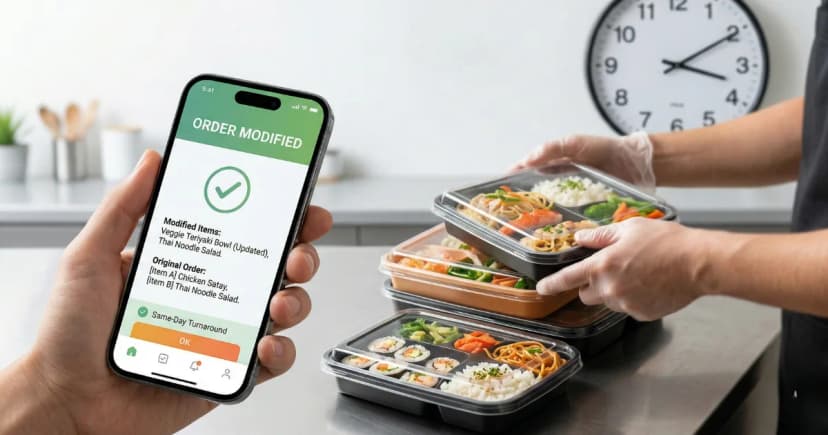
Same-Day Order Changes: Our Flexibility Policy Explained
Flavory Food explains our same-day order change policy for Vancouver families, kindergartens, and sc
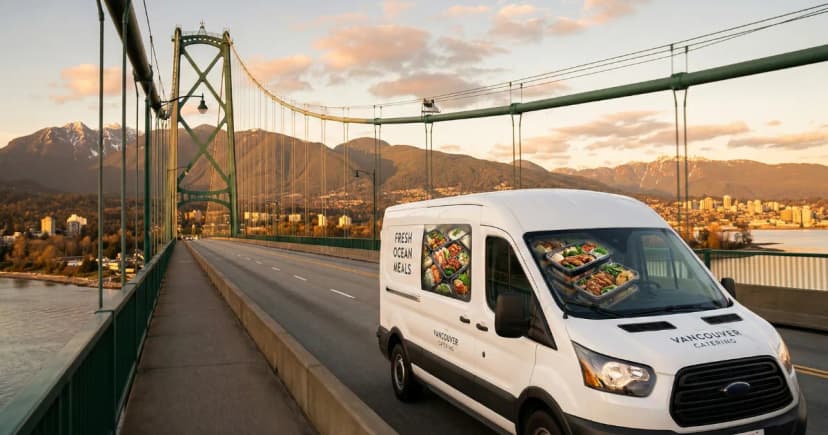
North Vancouver Meal Delivery: Crossing the Bridge for Fresh Asian Food
North Vancouver meal delivery from The Storm Cafe. Fresh Asian cuisine across Lions Gate and Ironwor
Want to taste our meals?
Book a free tasting and let our fresh ingredients speak for themselves.
Free Tasting