After-School Program Catering: Snacks and Meals for 3-6 PM
After-school catering for Vancouver programs serving kids 3-6 PM. Snacks, mini-meals, bento boxes, per-child pricing, and BC food safety requirements.
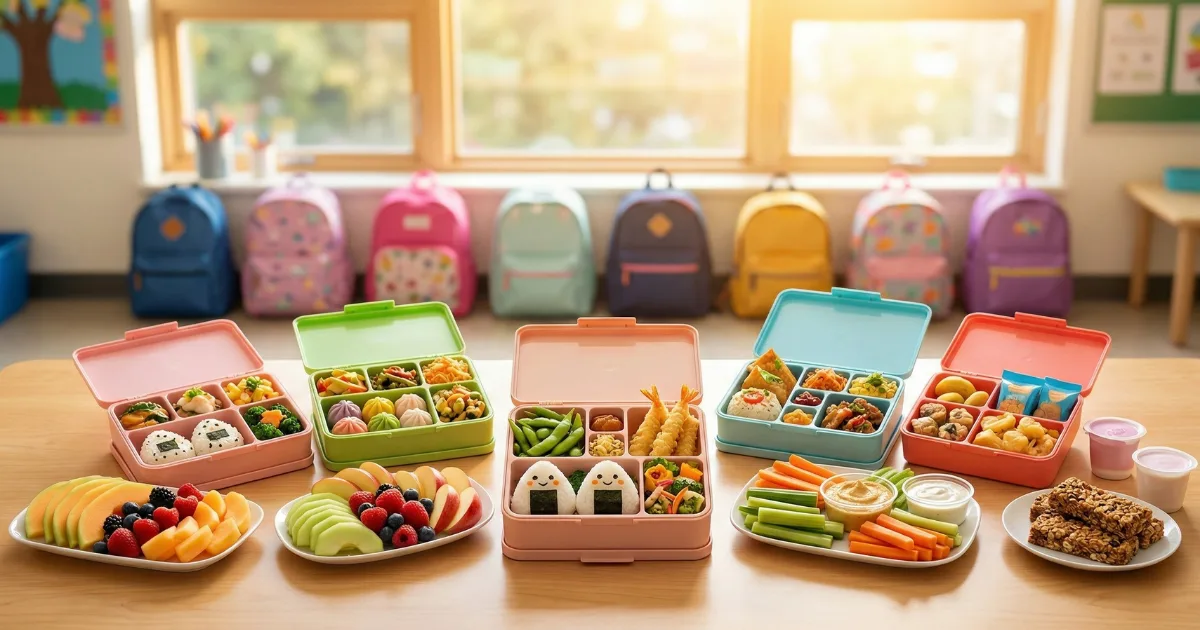
Why the 3-6 PM Window Is a Catering Challenge No One Talks About
After years of catering to schools, childcare centres, and corporate offices across Metro Vancouver, I can tell you that after-school program catering is the most underserved segment in this market. Summer camps get attention. School lunch programs get attention. But the 3-6 PM window — when 20-80 kids are burning through their last reserves of energy after a full school day — gets treated like an afterthought. A bag of crackers and some juice boxes. Maybe a granola bar if the program coordinator remembered to buy them.
That's not good enough. Kids who've been in school since 8:30 AM and then transition into an after-school program need real food. Not a candy bar. Not a bag of chips. Actual nutrition that bridges the gap between school lunch (which they ate at 11:30 or noon) and family dinner (which might not happen until 7 PM). That's a five-to-seven-hour stretch where growing bodies are running on fumes.
Vancouver runs hundreds of after-school programs — community centre programs through Parks & Rec, private after-school academies, school-run extended day programs, church-based youth groups, and sport-specific training programs. Every single one of them faces the same question: what do we feed these kids, and how do we do it safely, affordably, and without turning our coordinators into short-order cooks?
Here's how we approach it at The Storm Cafe and Flavory Food, and what every program administrator should know before choosing a catering partner for the after-school window.
Summary: After-school programs serving kids from 3-6 PM face a unique catering gap: children need real nutrition 5-7 hours after school lunch, not just packaged snacks. Vancouver runs hundreds of after-school programs across community centres, private academies, and school-run extended day programs, all needing reliable food solutions for the late-afternoon window.
The After-School Nutrition Gap: What Research and Experience Tell Us
Kids arriving at after-school programs between 2:30 and 3:30 PM have typically eaten lunch four to five hours earlier. For elementary-age children (ages 5-12), that gap matters more than most program administrators realize. Blood sugar drops, attention fades, and behaviour problems spike — not because kids are being difficult, but because they're genuinely hungry.
Canada's Food Guide recommends offering children healthy meals and snacks at regular intervals throughout the day to support growth and energy needs[1]. After-school programs that skip proper snack service or rely on ultra-processed options are working against this guidance at the exact moment kids need fuel most.
What I've observed delivering to after-school programs across Metro Vancouver:
- Programs that serve a structured snack within 30 minutes of arrival see measurably better engagement in afternoon activities. Coordinators tell me this consistently — the difference between a calm room and chaos often comes down to whether the kids ate something real when they walked in.
- Kids aged 5-8 need smaller, more frequent portions. A single large snack at 3:15 PM doesn't sustain them until 6 PM pickup. The programs that work best split their food service into two windows: an arrival snack (3:00-3:30 PM) and a late-afternoon mini-meal (4:45-5:15 PM).
- Kids aged 9-12 eat more than most adults expect. Pre-teen appetites rival adult portions, especially after sports or physical activity programming.
Snack vs. Mini-Meal vs. Full Meal: What Your Program Actually Needs
Not every after-school program needs the same level of food service. Here's the framework I use when consulting with new program clients:
| Service Level | When to Use | Per-Child Cost Range | What's Included |
|---|---|---|---|
| Arrival snack | Programs ending by 4:30 PM | $3.50-$5.00 | Fresh fruit, vegetable sticks with dip, whole grain crackers, cheese or yogurt |
| Substantial snack | Programs ending by 5:30 PM | $5.00-$7.50 | Snack items plus a protein component: hummus wraps, edamame, cheese quesadilla bites |
| Mini-meal | Programs ending at 6:00 PM or later | $7.50-$10.00 | Half-portion bento box: rice, protein, vegetable, fruit. Enough to bridge to dinner. |
| Full after-school meal | Programs replacing family dinner (rare) | $10.00-$13.00 | Full bento box equivalent to a light dinner: complete protein, grain, two vegetable servings |
The most common mistake I see: Programs running until 5:30 or 6:00 PM that only budget for a light snack. A handful of goldfish crackers at 3:15 PM does not sustain a 7-year-old through two and a half more hours of activity. By 5:00 PM, you have hungry, irritable kids and frustrated parents who pick up a child who hasn't eaten properly since noon.
Summary: Children arriving at after-school programs need structured nutrition within 30 minutes of arrival. Programs running past 5:00 PM should plan two food service windows: an arrival snack and a late-afternoon mini-meal. Per-child costs range from $3.50 for basic snacks to $13.00 for full meal service depending on program length.
How The Storm Cafe Serves After-School Programs in Vancouver
Flavory Food currently delivers 500+ meals per week across Greater Vancouver, serves 50+ corporate clients, and maintains a 4.9 customer rating[2]. We've extended that same operational discipline into after-school program catering because the logistics overlap is natural — we're already running delivery routes through Vancouver, Burnaby, Richmond, and surrounding areas during the exact window these programs need food.
Our After-School Delivery Model
After-school delivery operates on a different rhythm than lunch catering. Here's how we've adapted:
Step 1: Confirm your program's service windows.
Most after-school programs need food delivered between 2:30 and 3:00 PM — after the lunch rush has cleared but before kids arrive from school dismissal. This timing actually works in our favour logistically. By 2:30 PM, Richmond's brutal midday traffic (11:45 AM to 1:15 PM) has cleared, and Burnaby office-area congestion drops significantly. Delivery routes that take 50 minutes at noon take 30 minutes or less at 2:30 PM.
Step 2: Choose your service format.
| Format | Best For | Details |
|---|---|---|
| Individual snack boxes | Programs with 10-30 kids, multiple dietary restrictions | Pre-portioned, labelled per child, allergen-flagged |
| Bento box minis | Programs wanting a substantial mini-meal for 20+ kids | Half-portion bento: rice, protein, vegetable, fruit |
| Party tray + portioning | Large programs (40+ kids) where staff handle distribution | Cost-effective, flexible portions, less packaging waste |
Step 3: Lock in your weekly schedule.
After-school programs run on predictable weekly cycles — Monday through Friday, same time, same location. This makes menu planning and delivery route optimization straightforward. We set up a standing weekly order with the program coordinator, confirmed every Monday morning for that week's headcount and any dietary changes.
Step 4: Build your allergen protocol.
This is non-negotiable for children's programs. Every after-school order includes:
- Written allergen registry matching the program's enrollment records
- Individual labelling on every snack box or bento identifying contents and allergens
- Separate preparation for allergen-free items using dedicated equipment
- Clear identification of nut-free items — nut-free is the default for all children's programs we serve
Menu Options Built for the After-School Window
I've learned through trial and error what works for kids in the 3-6 PM window. The rules are different from lunch catering:
- Finger-friendly is essential. Kids in after-school programs are often eating between activities — art projects, homework time, sports warmups. Food that requires a fork, knife, and a clean table doesn't fit the environment. Wraps, cut fruit, vegetable sticks, rice balls, and bento compartments work. Soup doesn't.
- Portion size matters more than variety. A beautifully diverse snack plate with eight tiny portions looks impressive but frustrates kids who just want enough of one thing to feel full. Two or three items in adequate quantity beats a sampler platter every time.
- Sugar crashes are real. Juice boxes and sweetened granola bars spike blood sugar and drop it within 45 minutes — right when your program is trying to run structured activities. We build every after-school menu around protein, whole grains, and natural sugars from fruit.
Our After-School Menu Categories:
Healthy Snack Boxes ($3.50-$5.00 per child)
- Fresh seasonal fruit (BC berries in summer, apple slices and mandarin segments in winter)
- Vegetable sticks with hummus or edamame dip
- Whole grain crackers with cheese
- Rice crackers with seaweed (a consistent kid favourite that surprises every new coordinator)
Substantial Snack Boxes ($5.00-$7.50 per child)
- Everything in the healthy snack box, plus:
- Chicken or tofu skewer bites
- Mini onigiri (Japanese rice balls with filling)
- Edamame pods
- Cheese and whole wheat pita triangles
Mini-Meal Bento Boxes ($7.50-$10.00 per child)
- Half-portion bento: steamed rice, teriyaki chicken or glazed tofu, steamed broccoli, carrot sticks, seasonal fruit
- Asian-inspired wraps: lettuce wraps with ground chicken or mushroom filling
- Noodle bowls: udon or soba with vegetables and protein, served room-temperature for easy distribution
Full After-School Meal ($10.00-$13.00 per child)
- Full bento box: rice, main protein (teriyaki chicken, salmon, or mapo tofu), two vegetable sides, fruit, and a small treat
- Flavory Food party tray portions: served family-style for larger groups
Summary: Flavory Food delivers after-school catering between 2:30-3:00 PM when traffic has cleared from the midday rush. Menu options range from healthy snack boxes ($3.50-$5.00/child) to full bento meals ($10.00-$13.00/child). All children's programs default to nut-free preparation with individual allergen labelling.
After-School Meal Timing and Delivery Windows
Getting the timing right for after-school delivery requires understanding both Vancouver traffic patterns and how after-school programs actually operate. This chart shows the critical delivery and service windows:
Delivery Timing: The After-School Advantage
Here's the operational reality that makes after-school catering surprisingly efficient compared to lunch delivery:
| Factor | Lunch Delivery (11:00-12:30 PM) | After-School Delivery (2:15-3:00 PM) |
|---|---|---|
| Richmond traffic | Brutal — add 20-min buffer minimum | Cleared — standard transit times |
| Route time: Richmond to Downtown | 50 minutes peak | 30 minutes or less |
| Kitchen pressure | Competing with corporate lunch orders | Post-lunch lull — kitchen has capacity |
| Food holding window | Tight — serve within 30-60 min of arrival | Flexible — snacks can hold safely for 2+ hours with proper containers |
The 2:15-3:00 PM delivery window sits in a sweet spot: lunch rush is over, afternoon commute hasn't started, and our kitchen has finished the bulk of its corporate orders. For program coordinators, this means more reliable arrival times and fewer last-minute delays than lunch delivery.
Route-specific notes for after-school programs:
- Burnaby community centres and school-adjacent programs: 2:30 PM delivery avoids both the noon office lunch rush and the 3:15-3:45 PM school zone congestion. Use the 15-minute gap between our arrival and student arrival for setup.
- Richmond programs: The difference between a noon delivery and a 2:30 PM delivery through Richmond is dramatic. No. 3 Road and Westminster Highway are manageable by mid-afternoon.
- Downtown Vancouver programs: Watch for the 3:00-3:30 PM school zone slowdowns near program locations. Deliver at 2:30 PM sharp to avoid this.
- North Vancouver: Lions Gate Bridge adds unpredictability. We schedule North Van after-school deliveries first in the afternoon route to build in bridge delay buffer.
Summary: After-school delivery between 2:15-3:00 PM takes advantage of a traffic lull between the lunch rush and afternoon commute. Routes through Richmond that take 50 minutes at noon drop to 30 minutes by mid-afternoon. Programs should plan two food service windows for sessions running past 5:00 PM.
Pricing for After-School Programs: Per-Child Rates and Volume Structure
After-school program budgets are typically tighter than summer camp or corporate lunch budgets. Most programs operate on a per-child fee model with thin margins, and food costs get scrutinized carefully. Here's how our pricing works and what coordinators should budget for:
Per-Child Pricing by Service Level and Group Size
| Group Size | Arrival Snack | Substantial Snack | Mini-Meal Bento | Full Meal |
|---|---|---|---|---|
| 10-25 kids | $4.50-$5.00 | $6.50-$7.50 | $9.00-$10.00 | $11.50-$13.00 |
| 26-50 kids | $3.75-$4.50 | $5.50-$6.50 | $7.50-$9.00 | $10.00-$11.50 |
| 51-80 kids | $3.50-$3.75 | $5.00-$5.50 | $7.50-$8.50 | $9.50-$10.50 |
What drives price variation within each range:
- Dietary restriction complexity. Programs with 5+ distinct allergen or dietary requirements cost more to serve because of separate preparation runs and dedicated equipment time. A program where every child can eat the same menu is operationally simpler.
- Delivery distance. Programs within our core delivery zone (Vancouver, Burnaby, Richmond) have delivery fees bundled into per-child pricing for groups of 25+. Outlying areas — Surrey, Coquitlam, North Vancouver — carry a delivery surcharge of $25-$45 per drop.
- Menu customization. Standard rotating menus are the most cost-effective. Fully custom weekly menus (program chooses every item) add 10-15% to per-child costs due to sourcing complexity.
How to Structure a Weekly After-School Catering Budget
For a program serving 35 kids, Monday through Friday, running until 5:30 PM (substantial snack model):
| Budget Item | Per-Child/Day | Weekly (35 kids) | Monthly (4 weeks) |
|---|---|---|---|
| Substantial snack | $5.50-$6.50 | $962-$1,137 | $3,850-$4,550 |
| Delivery (bundled at 35+) | Included | Included | Included |
| 10% buffer (extra portions) | $0.55-$0.65 | $96-$114 | $385-$455 |
| Total | $6.05-$7.15 | $1,058-$1,251 | $4,235-$5,005 |
Weekly contracts are the norm for after-school programs. Unlike summer camps (which run in weekly blocks) or corporate catering (which often orders day-by-day), after-school programs follow the school calendar. We structure agreements on a September-to-June school-year basis with weekly headcount confirmations every Monday morning.
Pro days, holidays, and irregular schedules: Vancouver school district professional development days and statutory holidays create gaps in the regular schedule. Our standing orders automatically adjust — no food ships on days the program doesn't run. Coordinators confirm the weekly schedule by Monday 9:00 AM, and we adjust Tuesday-through-Friday deliveries accordingly.
Summary: Per-child after-school catering costs range from $3.50 for basic snacks to $13.00 for full meals, with volume discounts starting at 26 kids. A typical 35-child program running Monday-Friday with substantial snacks budgets $4,235-$5,005 monthly. Contracts follow the September-to-June school year with weekly headcount confirmations.
Food Safety for Children's After-School Programs
Feeding children carries higher stakes than any other catering context. After-school programs add a specific complication: food delivered at 2:30 PM may not be fully consumed until 5:15 PM — a holding window of nearly three hours. That's a food safety challenge that demands proper planning.
BC Licensing Requirements for Food in After-School Settings
Any after-school program operating under BC's Community Care and Assisted Living Act that serves food to children must comply with specific requirements[3]:
- Food handlers must hold FOODSAFE Level 1 certification or equivalent. This applies to anyone preparing, handling, or serving food — including program staff who portion and distribute catered meals on-site.
- Hot foods must be maintained above 60 degrees Celsius. Cold foods must stay below 4 degrees Celsius. The danger zone (4-60 degrees) is where bacterial growth accelerates, and children are more vulnerable to foodborne illness than adults.
- Allergen documentation must be current and accessible. Programs must maintain written records of each child's dietary restrictions, and these must be cross-referenced against food being served — every single day.
- Food preparation areas must meet health authority standards. Even if your program only receives and distributes catered food (no on-site cooking), your serving and holding areas must meet basic sanitation requirements.
Temperature Control for the Extended After-School Window
The 2:30-5:15 PM holding window is longer than typical lunch service. Here's how to manage it:
For hot items (mini-meals, bento boxes with warm components):
- Use insulated hot-holding containers rated for 3+ hours. Standard lunch bags won't maintain safe temperatures through a full after-school session.
- Check food temperature with a probe thermometer before second-service distribution (4:45 PM). If any item has dropped below 60 degrees, discard it.
- We pack hot after-school items with commercial hot packs tested for extended hold times — the same packs we use for our wettest, coldest rainy-season deliveries from October through April.
For cold items (snack boxes, fruit, yogurt, hummus):
- Cold items are the safer choice for after-school programs precisely because the holding requirements are simpler. Keep items below 4 degrees with ice packs rated for 3+ hours and the food stays safe through the entire service window.
- We recommend cold-format snack boxes as the default for arrival snacks and reserve hot items for the late-afternoon mini-meal if the program runs a two-service model.
Allergen Management: Non-Negotiable Protocols for Children's Programs
After-school programs in Vancouver draw from the full diversity of the city's families. In a group of 30 kids, expect multiple nut allergies, dairy-free requirements, halal dietary needs, and at least one or two medical dietary restrictions (celiac, diabetes management).
Our allergen protocol for every after-school delivery:
- Nut-free is the default. Every item in every after-school order is prepared nut-free. No exceptions. No tree nuts, no peanuts, no "may contain traces" ingredients.
- Individual labelling. Every snack box and bento gets a label listing all ingredients and flagging the top allergens (dairy, gluten, soy, egg, shellfish, sesame).
- Separate preparation. Allergen-free items are prepared using dedicated cutting boards, utensils, and prep surfaces. Our kitchen follows the same allergen isolation protocols we use for corporate orders — but with tighter tolerances because we're serving children.
- Coordinator handoff checklist. On delivery, our driver reviews the allergen manifest with the program coordinator. Every restricted meal is physically separated and identified before the driver leaves.
This isn't bureaucratic overhead. A single cross-contamination incident in a children's program is a program-ending event. The liability, the parent trust violation, the potential medical emergency — none of it is worth cutting corners on allergen control.
Summary: After-school food must maintain safe temperatures (above 60C hot, below 4C cold) through a holding window of up to three hours. BC licensing requires FOODSAFE Level 1 certification for all food handlers, current allergen documentation, and health authority-compliant serving areas. Nut-free preparation is the default for all children's program catering.
Coordinating With After-School Program Administrators
The operational relationship between a caterer and a program coordinator determines whether food service runs smoothly or becomes a daily headache. After catering to dozens of youth programs across Metro Vancouver, here's the communication protocol that works:
Onboarding: Before the First Delivery
Week 1: Discovery meeting (in person or video)
- Visit the program site. Confirm the delivery access point — is it a loading dock, a front entrance, a gymnasium hallway? Community centres like those run by Vancouver Parks & Recreation often have specific vendor access procedures that differ from their public entrances.
- Identify where food will be stored between delivery (2:30 PM) and service (3:00 PM and/or 4:45 PM). Confirm on-site refrigeration or insulated holding equipment is available and adequate for the expected volume.
- Collect the full dietary restriction registry for all enrolled children. This must come in writing, signed by a parent or guardian for each child.
- Agree on the menu format and rotation schedule. We recommend a 3-week rotating menu for after-school programs — shorter than the 4-week cycle used in childcare because after-school menus are simpler and kids respond better to familiar favourites appearing more often.
Week 2: Menu approval and test delivery
- Send the full rotating menu with ingredient lists for written sign-off by the program director.
- Run a test delivery. Time the route. Confirm food temperatures on arrival with a probe thermometer. Have program staff handle distribution as they would on a real day. Fix any logistics issues before children are involved.
Ongoing: Weekly Communication Rhythm
| Day | Action | Who |
|---|---|---|
| Monday 9:00 AM | Confirm weekly headcount and any schedule changes (Pro-D days, holidays) | Program coordinator to caterer |
| Monday 9:00 AM | Flag any new dietary restrictions from new enrollments | Program coordinator to caterer |
| Daily, 30 min pre-delivery | Text ETA and confirm delivery contact is on-site | Caterer to program coordinator |
| Daily, on delivery | Review allergen manifest and restricted meal identification | Driver and program coordinator |
| Friday 4:00 PM | Weekly feedback: what was eaten, what came back, any issues | Program coordinator to caterer |
The Friday feedback loop is critical. After-school program kids are honest — if they don't like something, they don't eat it. That half-eaten tray of food tells you everything you need to know. We adjust the following week's menu based on this real-world data, not assumptions.
Working With Different Program Types
Community centre programs (Vancouver Parks & Recreation, City of Burnaby, etc.):
- These operate under municipal guidelines with additional procurement and vendor approval processes. Budget for a 2-4 week onboarding period.
- Delivery access varies significantly by location. Some centres have dedicated kitchen facilities; others have nothing more than a counter and a sink.
- Insurance requirements: expect to provide proof of commercial liability insurance and food safety certification documentation as part of vendor registration.
School-run extended day programs:
- School kitchens may or may not be available for food holding and distribution. Confirm with the school administration, not just the program coordinator.
- Schools in the Vancouver School Board district often have specific vendor policies for food brought on-site. Verify before your first delivery.
Private after-school academies and tutoring centres:
- These typically have the most flexibility on menu choices and the least infrastructure for food handling. Smaller programs (10-20 kids) in commercial spaces may lack refrigeration entirely.
- Cold-format snack boxes are often the most practical choice for these environments.
Sport-specific programs and martial arts schools:
- Higher calorie needs. Kids coming off 60-90 minutes of physical activity need more protein and larger portions than kids in homework-focused programs.
- Timing shifts later: food service at 5:00-5:30 PM rather than 3:00-3:30 PM, aligned with post-practice schedules.
Summary: Effective after-school catering coordination requires a structured onboarding process (site visit, dietary registry, menu approval, test delivery) followed by weekly Monday headcount confirmations and Friday feedback reviews. Different program types (community centres, schools, private academies, sport programs) each have distinct infrastructure and scheduling needs.
Nutritional Balance for Kids Coming Off School Lunch
The after-school nutrition window is unique because you're building on top of whatever the child ate (or didn't eat) at school lunch. You can't control what happened at noon, but you can design your after-school menu to fill the most common nutritional gaps.
What Kids Typically Miss at School Lunch
Based on what I've observed working with school programs and the research on children's eating patterns in institutional settings[1]:
- Vegetables. This is the biggest gap. Most kids eat minimal vegetables at school lunch — they choose the pizza over the salad bar, the chicken nuggets over the stir-fry. After-school snacks that make vegetables accessible and appealing (hummus with colourful vegetable sticks, edamame pods, cucumber rounds with ranch) can recover some of that daily deficit.
- Protein adequacy. School lunches often provide enough carbohydrates but fall short on sustained protein, especially for active kids. After-school servings that include cheese, yogurt, chicken bites, tofu, or legume-based dips close this gap.
- Hydration. Kids don't drink enough water during the school day. Every after-school food service should pair with accessible water — not juice, not sports drinks.
Building After-School Menus That Complement School Lunch
Here's the principle: after-school food should be nutrient-dense, not calorie-dense. You're not replacing dinner — you're bridging a gap. Every item should justify its place by delivering protein, fibre, vitamins, or minerals, not just calories from refined carbohydrates and sugar.
Our after-school menu rotation follows these rules:
| Nutrient Target | How We Hit It | Example Items |
|---|---|---|
| Protein (8-15g per serving) | Include a protein source in every snack | Chicken skewer bites, edamame, cheese, hummus, tofu cubes |
| Fibre (3-5g per serving) | Whole grains and raw vegetables | Whole wheat crackers, vegetable sticks, fruit with skin |
| Vitamins A and C | Colourful fruits and vegetables | Carrot sticks, bell pepper strips, berries, mandarin segments |
| Calcium | Dairy or fortified alternatives | Cheese portions, yogurt cups, fortified soy milk |
| Hydration | Water paired with every service | Water station, not juice. Always. |
What we deliberately avoid in after-school menus:
- Candy, chocolate, and sugar-sweetened beverages
- Deep-fried items
- Highly processed snacks (chips, candy-coated granola bars)
- Anything with peanuts or tree nuts (default nut-free for all children's programs)
- High-sodium items that contribute to the school-lunch sodium problem rather than counterbalancing it
Summary: After-school menus should fill common school lunch gaps: insufficient vegetables, inadequate protein, and poor hydration. Every item must deliver protein, fibre, or micronutrients rather than empty calories. Pair all food service with water stations, not juice or sweetened drinks. Default nut-free preparation for all children's programs.
Frequently Asked Questions
What's the minimum order size for after-school program catering?
We serve after-school programs starting at 10 children. For groups under 25, individual snack boxes are the most practical format — they're pre-portioned, individually labelled with allergen information, and require no on-site portioning by staff. For groups of 25 or more, party tray format with staff-led portioning becomes more cost-effective. There's no maximum group size — we currently serve after-school programs ranging from 12 to 75 kids across Metro Vancouver.
Can you accommodate multiple dietary restrictions within the same after-school program?
Yes — this is standard for every children's program we serve. We start with a nut-free baseline for all items, then layer additional restrictions (dairy-free, gluten-free, halal, vegetarian, vegan) based on the program's enrollment registry. Each restricted meal is individually labelled and physically separated during delivery. For programs with five or more distinct dietary requirements, we recommend the individual snack box format rather than party trays to eliminate cross-contamination risk during distribution.
How do you handle schedule changes like Pro-D days and school holidays?
Our standing after-school orders follow the school calendar. Program coordinators confirm the weekly schedule every Monday by 9:00 AM — if Tuesday is a Pro-D day and the program doesn't run, no food ships. We automatically exclude statutory holidays and winter/spring break periods from the standing order. The coordinator can also adjust headcount weekly to account for enrollment changes, sick days, or field trips that reduce attendance.
What happens if food arrives late or at the wrong temperature?
If any delivery arrives more than 15 minutes past the confirmed window, or if food temperature on arrival falls outside safe ranges (below 60 degrees for hot items, above 4 degrees for cold items), we provide a full replacement or credit at no charge. Our drivers carry probe thermometers and log arrival temperatures for every children's program delivery. After-school programs have tighter timing tolerance than corporate lunch delivery — kids arriving from school can't wait — so we build a 15-minute buffer into every route.
Is your food preparation facility nut-free?
Our kitchen is not a fully nut-free facility — we prepare a wide range of menu items for corporate and family clients that may include nut-containing ingredients. However, all after-school program orders are prepared using dedicated nut-free equipment, separate preparation zones, and strict allergen isolation protocols. Every children's order follows a nut-free preparation sequence completed before any nut-containing items are prepared. For programs requiring facility-level nut-free guarantees (such as those with children who have severe anaphylactic nut allergies), we recommend discussing your specific needs with us directly so we can confirm whether our protocols meet your program's risk tolerance.
References
[1] Government of Canada, "Healthy eating for parents and children - Canada's Food Guide," 2026. Recommends offering kids healthy meals and snacks at regular times throughout day to help get enough nutrients and energy for growth. https://food-guide.canada.ca/en/tips-for-healthy-eating/parents-and-children/
[2] Flavory Food, "Vancouver Meal Delivery & Catering," 2026. Delivers 500+ meals per week, 50+ corporate clients, 4.9 customer rating. Bento boxes: $11.99-$15.99. Party trays: Dim Sum Party Tray $79.99 (40 pieces), Noodle Station $149.99 (20 servings). Service area: Vancouver, Burnaby, Richmond, Surrey, Coquitlam, North Vancouver. Daily fresh preparation. https://thestormcafe.com/
[3] Vancouver Coastal Health, "Food Safety for Community Programs and Childcare," 2026. Food safety requirements for licensed childcare and community programs serving children, including temperature control, food handler certification, and allergen documentation standards. https://www.vch.ca/en/health-topics/food-safety
Ready to set up after-school catering for your Vancouver program? We'll walk you through menu options, allergen protocols, and delivery logistics for your specific location and schedule. No commitment required — just a conversation about what your kids need.
Related Articles
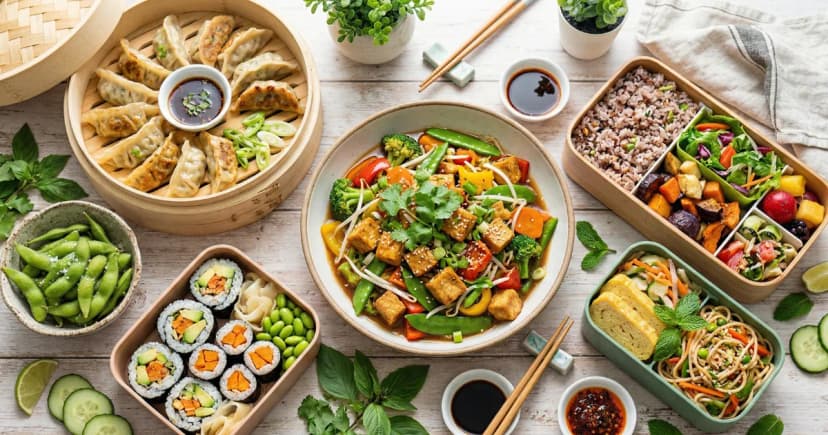
Vegetarian and Vegan Asian Meals: Our Plant-Based Menu
Explore The Storm Cafe's vegetarian and vegan Asian menu: tofu, tempeh, mushroom dishes, and veggie
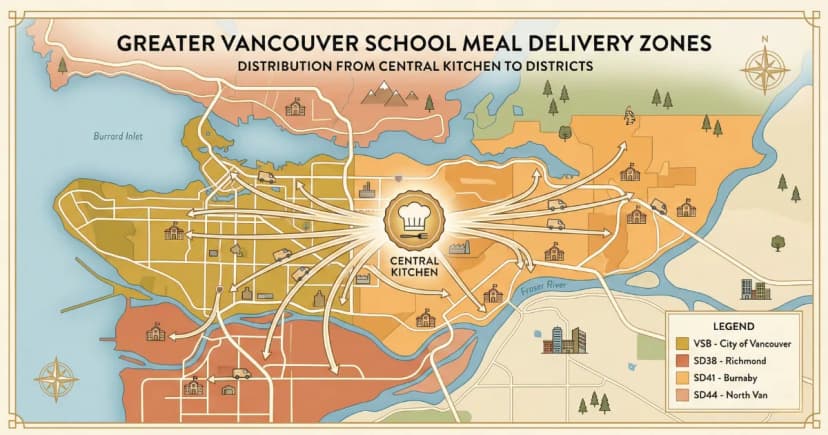
Vancouver School Lunch Delivery: Coverage Map and Zones
Flavory Food's school lunch delivery coverage across Greater Vancouver. Zone-by-zone guide with driv
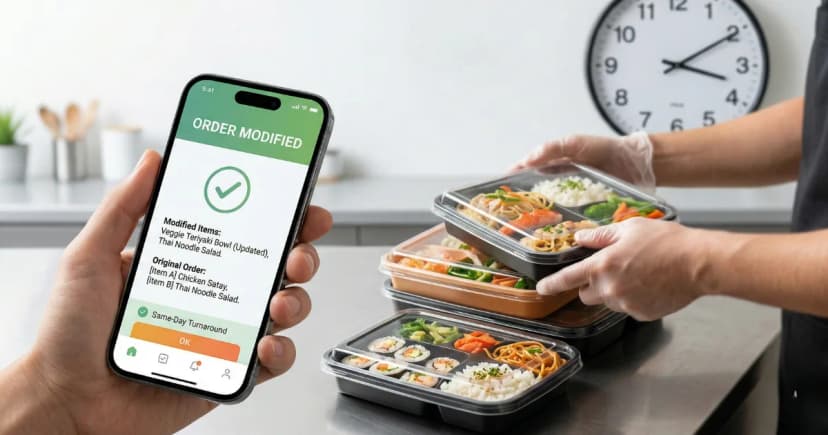
Same-Day Order Changes: Our Flexibility Policy Explained
Flavory Food explains our same-day order change policy for Vancouver families, kindergartens, and sc
Want to taste our meals?
Book a free tasting and let our fresh ingredients speak for themselves.
Free Tasting